Uganda on the Brink of Global Ridicule: Are We a Democracy or a Retirement Club for Senile Strongmen?
Despite earlier promises to retire and hand over power to a younger generation, Museveni has defied both internal and external calls for leadership renewal. Political observers argue that his continued grip on power has eroded the country's democratic institutions and turned Uganda into a global laughing stock.

Uganda Today: Uganda on the Brink of Global Ridicule: Are We a Democracy or a Retirement Club for Senile Strongmen?
By Moses Mafumo | www.ugandatoday.co.ug | June 25, 2025
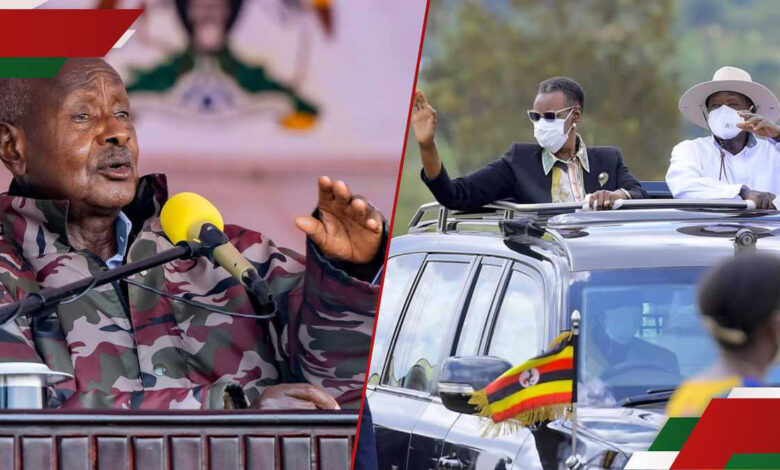
As Uganda gears up for yet another round of what many critics now openly call “charred organised elections,” President Yoweri Kaguta Museveni, aged 80, and his fellow octogenarian Gen. Moses Ali are drawing sharp ridicule both locally and globally. The veteran leaders—both generals, one a military general long accused of being a relic of a violent past, the other a President seeking a seventh consecutive term—are now being lampooned as the symbols of Uganda’s democratic decay.
Museveni to Pick Nomination Forms for a 7th Term
On June 28, 2025, Uganda’s long-serving President, Gen. Yoweri Museveni, is expected to formally pick his nomination forms at the NRM Secretariat to run again in the 2026 general elections. This would be his seventh consecutive term, having first taken office in 1986 after a bloody five-year guerrilla war and led the country unelected for 10 years until 1996 when he organised presidential elections.
Despite earlier promises to retire and hand over power to a younger generation, Museveni has defied both internal and external calls for leadership renewal. Political observers argue that his continued grip on power has eroded the country’s democratic institutions and turned Uganda into a global laughing stock.
Gen. Moses Ali: A Nomination that Stinks of Legal and Moral Decay
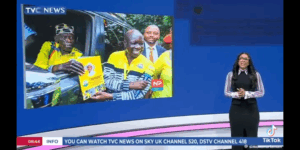
Just days earlier, the NRM Electoral Commission controversially cleared Gen. Moses Ali, another 86-year-old political dinosaur, to run for Adjumani West Constituency. The nomination sparked a legal firestorm and drew massive online criticism, especially after international media such as Nigeria’s TVC News aired a scathing segment condemning the Ugandan regime for recycling “fossilized leadership” that has outlived its usefulness.
“These are men whose cognitive faculties are waning, yet they insist on staying at the helm of power. Uganda is not a geriatric colony,” noted one commentator during the broadcast.
In a compelling article on Kakwenza, author and human rights advocate Kakwenza Rukirabashaija dissected the legality of Moses Ali’s nomination. He cited clear constitutional and medical grounds on which the courts can nullify the nomination of an ailing candidate incapable of effectively representing the electorate.
2001 Supreme Court Directives: Still Gathering Dust
Uganda’s continued democratic backsliding can be traced back to the seminal 2001 presidential election petition filed by Dr. Kizza Besigye, Museveni’s then-challenger. The Supreme Court, in a majority judgment, agreed that there were massive electoral irregularities, including intimidation, voter bribery, and abuse of incumbency.
But more crucially, the Court recommended urgent electoral reforms, one of which was prohibiting a sitting president from handpicking members of the Electoral Commission—a practice that has entrenched executive capture of electoral processes. Museveni has since ignored these legally binding reforms for 26 years, leading to a cycle of sham elections every five years.
“The very idea that a contesting candidate can appoint his own referees is a travesty of electoral justice,” said legal scholar Prof. Joe Oloka Onyango in a 2019 public lecture. “It undermines both the perception and the substance of electoral fairness.”
A Nation of Political Pensioners
Uganda’s Parliament and executive have increasingly turned into retirement homes for the politically privileged, many of whom are clearly past their productive years. From Jim Muhwezi to Rebecca Kadaga, professor Ephraim Kamuntu and now Gen. Moses Ali and Museveni, the trend reflects a disturbing refusal to give way to fresh, innovative leadership.
This is not merely a domestic concern. International observers, democracy watchdogs, and African media outlets are now openly questioning Uganda’s commitment to democratic norms.
“Uganda risks becoming a cautionary tale of post-liberation autocracy gone senile,” a recent editorial in Kenya’s The Standard observed.
Conclusion: Time to Reset or Regress Further?
Uganda is at a critical juncture. The continued recycling of senile leaders, disregard of judicial orders, and manipulation of electoral processes is pushing the country towards democratic irrelevance.
Unless Ugandans rise to demand genuine reform—and unless the courts find the courage to enforce their own rulings—Uganda may soon be known not for its resilience or potential, but for being a global symbol of political farce.
🔻 Follow us on X: @uganda43443
Published by www.ugandatoday.co.ug, your trusted source for news and analysis
Website: https://www.ugandatoday.co.ug/about-cmk
Website: https://www.ugandatoday.co.ug
WhatsApp: +256 702 239 337
X (formerly Twitter): @uganda43443 | @ugtodaynews
Email: ugandatodayedition@gmail.com
Let’s help you grow your brand and keep your audience informed. Partner with Uganda Today