Why Iran’s Supreme Leader Was Targeted: Understanding the Israel–Iran–U.S. Rivalry
+256 702 239 337: Iran is predominantly Shia, while Saudi Arabia is largely Sunni. This religious difference has fueled rivalry between the two countries for regional influence. However, the most intense geopolitical rivalry today is between Israel and Iran.
UgandaToday: Why Iran’s Supreme Leader Was Targeted: Understanding the Israel–Iran–U.S. Rivalry
By Taffy Theman
Reports that Iran’s Supreme Leader was killed in a major military operation allegedly involving Israel and the United States have sent shockwaves across the Middle East and beyond. To understand why such an extraordinary event would occur, one must examine the long and complicated history of rivalries, religion, oil politics, and nuclear tensions in the region.
This article explains the roots of the crisis in clear and accessible terms.
The Middle East: Oil, Power and Rivalries
The Middle East is a region in Western Asia that includes countries such as Iran, Israel, Palestine, Saudi Arabia, Iraq, Turkey, Jordan, Syria, Lebanon, Kuwait, Qatar, Oman, the United Arab Emirates, Yemen and Bahrain.
The region holds some of the world’s largest oil reserves. Oil generates immense wealth — but it also attracts global competition. Powerful nations outside the region, particularly the United States, have historically sought influence there due to energy security, trade routes, and geopolitical strategy.
Advertising
Since the 1940s, America’s relationship with Iran has fluctuated between cooperation and hostility, shaped by changing political realities.
Religious and Regional Competition
Beyond oil, the Middle East is marked by regional and religious competition. A major divide within Islam — between Sunni and Shia denominations — has shaped political alliances.
Iran is predominantly Shia, while Saudi Arabia is largely Sunni. This religious difference has fueled rivalry between the two countries for regional influence. However, the most intense geopolitical rivalry today is between Israel and Iran.
The Israel–Iran Conflict
Israel relies heavily on its strong military capabilities and its strategic alliance with the United States. Iran, on the other hand, has positioned itself as one of Israel’s most vocal adversaries.
Since the 1979 Islamic Revolution led by Ruhollah Khomeini, Iran’s hardline leadership has repeatedly rejected Israel’s legitimacy as a state. Successive Iranian leaders have described Israel as an illegitimate Western creation in the Middle East.
Tensions have escalated over Israel’s military operations in Palestine, particularly in Gaza. Iran has consistently condemned Israel’s actions and provided support — financial, political and logistical — to groups opposing Israel.
The Nuclear Question
Another central issue in the conflict is Iran’s nuclear program.
Israel insists that Iran must never acquire nuclear weapons, arguing that Iranian leaders have openly threatened Israel’s destruction. Iran maintains that its nuclear activities are for peaceful energy purposes.
Nuclear weapons are widely regarded as a powerful deterrent. For example, North Korea’s possession of nuclear weapons has significantly complicated any military calculations against it. Israel and the United States fear that a nuclear-armed Iran would dramatically shift the balance of power in the Middle East.
America’s Broader Interests
Some argue that the United States intervenes in foreign countries solely because of oil. However, history suggests American foreign policy is driven by multiple factors — political, strategic and security-related.
The United States fought in the Korean War to defend South Korea despite Korea having limited oil reserves. It also engaged militarily in Afghanistan, another country without major oil resources. These examples show that oil is only one component of American foreign policy calculations.
In June 2019, then-President Donald Trump even became the first sitting U.S. president to step onto North Korean soil when he crossed the Demilitarized Zone to meet Kim Jong Un — further illustrating that strategic considerations extend beyond oil.
The Roots of U.S.–Iran Hostility
After World War II, the United States increased its involvement in the Middle East to counter Soviet influence during the Cold War. Iran became a key ally due to its oil wealth and strategic location.
In 1951, Iranian Prime Minister Mohammad Mossadegh nationalized Iran’s oil industry, arguing it should benefit Iranians rather than foreign companies. In 1953, a coup — widely reported to have been backed by the United States and Britain — removed Mossadegh from power.
The coup strengthened the rule of Mohammad Reza Pahlavi, commonly known as the Shah, who ruled for 26 years. Though accused of authoritarian rule and human rights abuses, he remained a close ally of Washington and maintained cordial relations with Israel.
Public anger eventually exploded in the 1979 Islamic Revolution, which brought Ruhollah Khomeini to power and transformed Iran into an Islamic Republic.
Later that same year, Iranian students seized the U.S. Embassy in Tehran, holding American diplomats hostage for 444 days. Diplomatic relations between the two countries collapsed — and have never fully recovered.
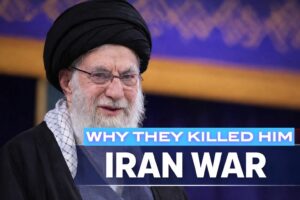
Ayatollah Ali Khamenei was killed by the joint strikes launched the US and Israel.
Ayatollah Ali Khamenei’s Role
After Khomeini’s death in 1989, Ali Khamenei became Iran’s Supreme Leader. For more than three decades, he shaped Iran’s regional strategy, strengthened ties with anti-Israel groups, and oversaw the expansion of Iran’s nuclear ambitions. Under his leadership, tensions with Israel and the United States deepened significantly.
Why Target a Supreme Leader?
In times of war or extreme geopolitical confrontation, leadership becomes symbolic and strategic. Removing a head of state or supreme leader can destabilize a government, disrupt command structures, and create internal uncertainty.
However, such actions also risk massive escalation. Iran’s political system is structured around clerical authority and institutional continuity, meaning succession mechanisms do exist. Whether those mechanisms can ensure stability during a crisis is another matter entirely.
A Region on Edge
The reported killing of Iran’s Supreme Leader would mark one of the most consequential geopolitical events of the 21st century. It would reshape alliances, trigger retaliation risks, and potentially widen the conflict across the Middle East.
As history shows, the Israel–Iran–U.S. triangle is rooted in decades of mistrust, ideological confrontation, religious rivalry and strategic competition. Any dramatic action against a sitting Supreme Leader would not occur in isolation — it would be the result of longstanding tensions that continue to define Middle Eastern politics.