UgandaToday: When Kinship Isn’t a Bar to Democracy: Why the President’s Dismissal of the National Unity Platform-backed Candidate Is Deeply Misplaced
In a recent public pronouncement, President Yoweri Museveni described the decision of the opposition party National Unity Platform (NUP) to field Florence Asio (who is a relative of the Speaker of Parliament) for the Bukedea Woman Member of Parliament seat as being “of the highest degree of shallowness”. That sweeping dismissal, however, fails to grapple with a deeper democratic truth: being closely or distantly related to a political figure does not automatically disqualify a citizen from standing for election. In fact, to insist otherwise is to water down the fragile democratic tenets Uganda is still struggling to uphold.
Relatives can (and do) stand against family — and win


Several examples — both local and regional — show that family ties do not automatically translate into political alignment.
-
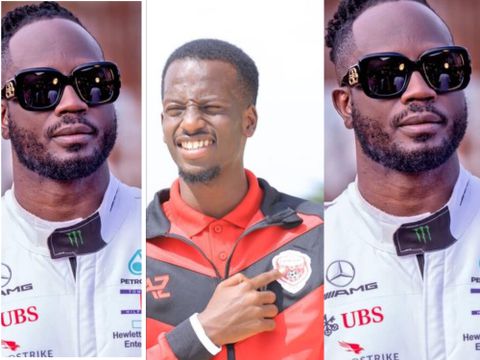
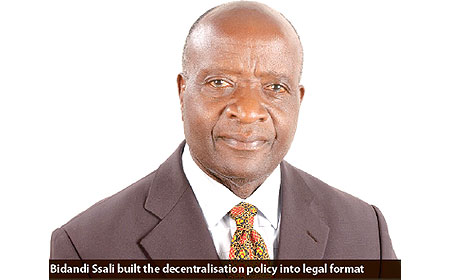
In Uganda, veteran politician Jaberi Bidandi Ssali ran as a presidential candidate in the 2011 election. Meanwhile, his son, the musician-turned-public figure Bebe Cool (real name Moses Ssali), openly supported President Museveni instead of his father. This demonstrates that relatives may hold entirely opposite political loyalties.
-
In Cameroon, the 27-year-old daughter of President Paul Biya publicly urged citizens not to vote for her father, declaring: “Do not vote for Paul Biya … because he has made too many people suffer.”
These cases clearly show that kinship alone cannot be used as a blanket justification to block or delegitimise a person’s candidacy.
Why the President’s stance is problematic
Here are a number of reasons why the President’s sweeping assertion — that it is somehow “shallow” for the NUP to field a relative of the Speaker — is deeply flawed:
-
Citizens’ rights and political equality. The Ugandan Constitution guarantees every citizen the right to run for public office (subject to age, residency and other legitimate criteria). To automatically exclude someone simply because of familial ties is to undermine the principle of equal political rights.
-
Presumption of competence. The claim seems to imply that a relative is automatically incapable of competing fairly or independently. That presumption denies the candidate’s individual agency, record or ideas.
-
Precedent for elimination of competition. If family-relationship becomes a criterion for disqualification or de facto blocking, we risk a trend where incumbents or the politically connected can engineer “unopposed” seats by citing kinship or alleged conflict of interest — hardly a recipe for democratic competition.
-
Fragile democracy, not closed family business. Uganda’s democratic institutions are still striving for depth: credible elections, pluralism, genuine competition. Denying someone the right to stand (or treating them as inherently suspicious because of a family connection) chips away at this progress.
-
Unclear motives for withdrawal do not strengthen the argument. In this particular case, Florence Asio did withdraw at the eleventh hour, giving varied reasons (first alleged abduction, then “pressure” from family). That does raise questions — but those questions relate to the conditions under which competition is taking place, not about whether she should ever have been allowed to contest.
On the alleged “unopposed” sail-through of the Speaker
In defending his remarks, the President thanked the Speaker for having “sailed through unopposed”. But that very scenario is problematic:
-
The fact that three contenders were earlier removed or declared ineligible by the election body — and the matter is still subject to court review — suggests that this unopposed “win” may owe more to technicalities or exclusions than clean competition.
-
An unopposed candidacy, especially in a democratic contest, should trigger reflection: is the terrain of competition open and fair? Or has the process been manipulated? To celebrate such a win as though it reflects robust choice is misleading.
-
By emphasising kinship as the issue (rather than the broader issue of competition, fairness and transparency), the President’s remarks divert attention from more pressing institutional concerns.
The danger of prioritising relationship over democracy
When political commentary or leadership rhetoric focuses on “you’re too close to someone, you shouldn’t contest”, we risk:
-
Reducing the political sphere to a family business, where eligibility is determined by bloodline or connection instead of ideas, competence or the will of the electorate.
-
Encouraging political actors to manufacture “relatives cannot compete” narratives as a means to disenfranchise potential challengers.
-
Undermining the idea that every citizen — regardless of background or relationship — ought to have the right to both stand and vote, provided they meet legitimate criteria.
-
Allowing incumbents to label any challenger with familial or relational ties as illegitimate, thereby weakening the opposition and closing space for choice.
Conclusion
If democracy is more than a ritual, it must recognise that citizens, not family trees, determine eligibility. The President’s broad-brush dismissal of Asio’s candidacy on the basis of her relationship to the Speaker fails that test. Rather than focusing on her family ties, the debate should centre on whether the electoral environment allowed fair competition, whether technical exclusions were properly justified, and whether voters genuinely had a choice.
In a country still working to deepen democratic norms, we must resist easy narratives that dismiss candidates because of who they are related to, and instead ask whether the system allows fair participation. Anything less risks treating elections as a family affair — a shift Uganda’s young democracy cannot afford.
#ChoiceNotConnection
UgandaElections #DemocracyAtWork #PoliticalRights #NotFamilyBusiness #FairCompetition
Publisher
-
Published by Uganda Today, your trusted source for news and analysis. Let’s help you grow your brand and keep your audience informed.
Partner with Uganda Today where your story matters in shaping the social and economic dynamics of the country.
Website: https://www.ugandatoday.co.ug/about-cmk
WhatsApp: +256 702 239 337
X (formerly Twitter): @uganda43443 |
Email: ugandatodayedition@gmail.com