UgandaToday: When History Repeats Itself: Museveni’s 7th Term Nomination and the Kololo Rally Show
By Uganda Today Staff Writer
Uganda’s political theatre once again entered the Guinness Book of “never-ending scripts” on Tuesday, September 23, 2025, as President Yoweri Kaguta Museveni—already four decades in power—was officially nominated to contest for the 2026 presidential elections. It will be his record-breaking seventh time on the ballot, a political marathon perhaps unmatched anywhere in Africa except perhaps in fairy tales where kings never die.
But the real story was not the nomination. It was what followed.
A Rally Frozen in Time: 1926–1931?
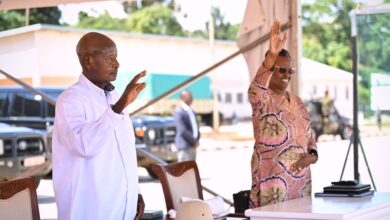
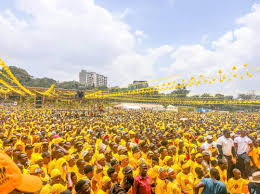
At 81 years old, President Museveni proceeded to address his supporters at the Kololo Independence Grounds. What should have been a triumphant post-nomination rally quickly turned into a tragicomic episode when the President, in full glare of cameras, repeatedly referred to the upcoming term of 2026–2031 as “1926–1931.”
The slip of the century instantly set the internet ablaze, with memes, TikToks, and WhatsApp forwards flooding Ugandan cyberspace. In one viral clip, Museveni, with characteristic confidence, declared:

“Thank you for electing me the chairman of the NRM and presidential candidate. We shall protect the gains and complete future projects from 1926 to 1931.”
For once, the opposition didn’t need a press conference—Twitter did the job. Critics joked that the President was either signaling a return to the colonial archives or finally confirming that Uganda is trapped in a political time machine.
The Crowd: Ferried, Fed and Paid to Cheer
Naturally, in functional democracies, presidential candidates’ supporters arrive willingly, inspired by conviction, drawn by ideology, and fed by hope. But in Museveni’s Uganda, support is increasingly an item on the classified national budget.
Witnesses at Kololo reported buses loading students (stripping off NRM yellow t-shirts to their uniforms), government workers, and assorted “supporters” who admitted they had been promised transport, food, and some small “facilitation.” Instead of chanting slogans of conviction, many chanted slogans of hunger—waiting for the handouts that never came in full.
Bag of Shame: Supporters Fighting Over Money
The rally’s comedy climax came when a group of the ferried “supporters” was caught on camera fighting over a bag allegedly containing money meant for distribution. Videos show men and women scrambling like contestants in a reality TV show called Survivor: Kololo Edition.
The spectacle laid bare the commercialisation of politics under the ruling National Resistance Movement (NRM)—where support is less about belief in policy and more about the weight of a brown envelope.
A Legacy of Monetised Politics
For over 40 years, President Museveni has perfected the art of survival—part ideology, part gunpowder, and increasingly, part cash. What unfolded at Kololo was not merely an old man fumbling with history but the ugly portrait of a political system built on transactional loyalty.
The commercialisation of politics has entrenched runaway corruption: public resources are redirected to fund patronage networks while hospitals, schools, and roads languish in neglect. Yet, somehow, Uganda is told this is the only path to “securing the future.”
If 1926–1931 is anything to go by, the future looks like a recycled past.
Hashtags
#Museveni7thTerm #KololoComedy #UgandaDecides2026 #UgandaToday #PhoenixNewsFeeds #OperaNewsFeeds
Publisher