Uganda’s Stubborn Political Titans: Clinging Onto Power and the Rot They Leave Behind
From Moses Ali and Matia Kasaija to Rebecca Kadaga and Jim Muhwezi, Uganda remains tethered to political veterans whose governance styles are increasingly out of step with the demands of a youthful population hungry for accountability, innovation, and change.
Introduction: A Nation Held Hostage by Political Longevity
As Uganda gears up for the 2026 general elections, a worrying pattern is once again emerging — a persistent grip on power by a cohort of long-serving politicians. While their experience is often touted as a virtue, their extended presence in Uganda’s political theatre has not translated into national transformation. Instead, their continued hold on public office has, in many respects, become a symbol of stagnation, patronage, and deep-rooted corruption.
From Moses Ali and Matia Kasaija to Rebecca Kadaga and Jim Muhwezi, Uganda remains tethered to political veterans whose governance styles are increasingly out of step with the demands of a youthful population hungry for accountability, innovation, and change.
Moses Ali: A Relic of Power with Questionable Relevance
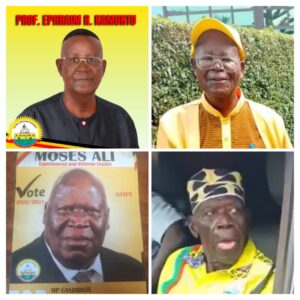
At 86, First Deputy Prime Minister Moses Ali is among the most senior and long-serving politicians in Uganda’s post-independence history. A former military general and close ally of President Museveni, Moses Ali has held various ministerial roles for decades. However, his continued stay in power raises serious concerns about leadership renewal and inclusivity.
His legislative productivity has waned, and critics argue that his extended presence is symbolic rather than substantive. In a region plagued by poverty and inadequate service delivery, his grip on his parliamentary seat has done little to uplift the socio-economic status of his constituents.
Ephraim Kamuntu: The Academic Turned Political Stalwart
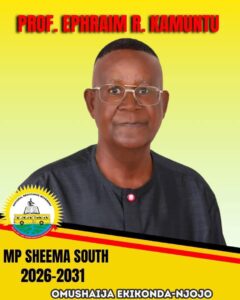
Ephraim Kamuntu’s evolution from academia to high-level government positions has been a fascinating — albeit controversial — journey. Once a respected university don, Kamuntu has held a series of ministerial roles, including environment, tourism, and justice. His governance style has been marked by a soft-spoken tone but limited tangible impact.
Advertising
Ephraim Kamuntu is using his erstwhile self portrait picture portraying him energetically to campaign instead of using his present haggard picture.
As he eyes another term, the question lingers: What legacy does Kamuntu leave behind? His tenure has coincided with increasing environmental degradation, especially in ecologically sensitive areas like forests and wetlands — largely due to weak enforcement and political compromises.
Matia Kasaija: The Embattled Custodian of Uganda’s Economy
Finance Minister Matia Kasaija has presided over Uganda’s economy for nearly a decade. During his time in office, public debt has ballooned, corruption scandals have rocked government agencies, and the cost of living has soared.
Despite frequent public frustration over economic mismanagement and misuse of public funds — including questionable supplementary budgets and procurement irregularities — Kasaija remains a mainstay in Museveni’s cabinet. Many economists argue that his leadership has failed to inspire the fiscal discipline and transparency Uganda desperately needs.
Jim Muhwezi: A Security Hawk Dogged by Corruption Claims
Veteran politician and security strongman Jim Muhwezi is another emblem of Uganda’s aging political elite. A former bush war fighter and current Minister for National Security, Muhwezi has been named in multiple corruption allegations, including the infamous Global Fund and GAVI scandals during his stint as Health Minister.
Despite his stained record, he remains politically buoyant, buoyed by state machinery and entrenched loyalties. His persistence in active politics sends a worrying message — that in Uganda, impunity is often rewarded with reappointment rather than accountability.
Rebecca Kadaga: The Gender Trailblazer Losing Her Reformist Luster
Rebecca Kadaga broke ground as Uganda’s first female Speaker of Parliament and has long been regarded as a champion of women’s rights and constitutionalism. However, her political trajectory in recent years has taken a more self-preserving turn.
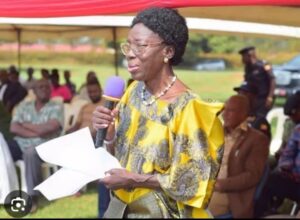
Third Deputy Prime Minister and Minister for East African Affairs, Rebecca Alitwala Kadaga physically looking frail, still thinks that she has more to offer!
Now serving as First Deputy Prime Minister and Minister for East African Affairs, Kadaga has aligned herself more closely with the ruling status quo, tempering the assertive independence that once defined her speakership. Her reluctance to relinquish political office also casts a shadow over her earlier reputation as a progressive voice for change.
John Nasasira: The Invisible Elder Statesman
Though less visible in recent years, John Nasasira remains emblematic of Uganda’s recycled political elite. With over three decades in various ministerial capacities, including Works, Transport, and ICT, his long political career has had modest developmental impact relative to the length of his tenure.
Road infrastructure under his watch remained riddled with corruption scandals and shoddy works. Even in retirement, Nasasira still looms as part of the old guard whose legacy is more remembered for missed opportunities than transformative leadership.
The Corruption Nexus: When Longevity Breeds Impunity
A key consequence of the political longevity of these individuals is the entrenchment of corruption. Prolonged tenures often create patronage networks where loyalty supersedes merit, procurement systems are manipulated, and oversight institutions are weakened.
The Auditor General’s reports repeatedly flag misappropriation in ministries headed by long-serving politicians. Civil society voices have long decried the lack of new leadership, arguing that Uganda’s chronic underdevelopment and youth unemployment are direct outcomes of recycled leadership that is disconnected from current realities.
Conclusion: Time for Political Renewal
As Uganda’s demographic tide shifts — with over 75% of the population below 30 — the country faces a critical choice. Will it continue to be governed by political fossils clinging to power, or will it embrace a new generation of leaders committed to transparency, equity, and progress?
The continued candidacy of the likes of Moses Ali, Matia Kasaija, and Jim Muhwezi in the 2026 elections is a clarion call for introspection. Uganda must begin to retire political monuments and replace them with leaders who reflect the aspirations of today, not the loyalties of the past.
Follow us on X: @uganda43443 For ongoing coverage of Uganda’s 2026 general election build-up.