Uganda Today: Uganda Law Society Boycotts Chief Justice’s Patongo Party Over Judiciary Independence Row
By Uganda Today Political Desk For www.ugandatoday.co.ug
Story filed by Uganda Today Political Desk
Kampala | 12 July 2025
The Uganda Law Society (ULS), under the leadership of its embattled President Isaac Ssemakadde, declared an official boycott of the Chief Justice’s Thanksgiving Party scheduled for today, 12th July 2025, in Patongo, Agago District. The Chief Justice, Hon. Alfonse Chigamoy Owiny-Dollo, is set to host President Yoweri Museveni and other dignitaries at the event—a move the ULS describes as a dangerous political overture intended to curry favour with the appointing authority in pursuit of a contract renewal.
In a strongly worded letter dated 9th July 2025, referenced RNB/P/002/2025, the ULS accused the Chief Justice of undermining judicial independence, sabotaging fair access to justice, and blurring constitutional lines between the Judiciary and the Executive, especially during a tense pre-election period.
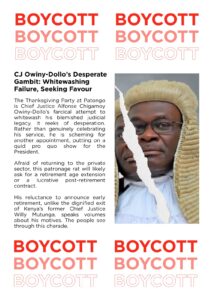
“Hosting the President of the Republic at a private gathering in your home area, at the commencement of the general elections, erodes public confidence in the separation of powers and the independence of the Judiciary,” the letter reads in part.
Tensions Rise Over De-Causelisted Appeals
At the heart of the protest is the abrupt de-causelisting of four high-stakes appeals (Civil Appeals 61, 98, 99, and 102 of 2025) scheduled for hearing on 10th July 2025. These cases are critical to the functioning of the ULS, including matters relating to its internal governance and protections against what the Society terms “judicial harassment” of its President.

According to the ULS, the decision was unlawfully executed by the Deputy Chief Justice, Dr. Flavian Zeija, allegedly under the guise of a third round of mediation, despite two prior failed attempts. The ULS argues that the court precedent set in Security Group vs. Marie Stopes (Civil Appeal 156 of 2013) invalidates the Registrar’s claim that conferencing is mandatory before scheduling an appeal.
“This is a clear attempt to delay justice and appease respondents and special interests,” Ssemakadde stated, accusing the Deputy Chief Justice of acting with impunity and political calculation.
Thanksgiving or Campaign Strategy?
The ULS letter condemns the Patongo Thanksgiving celebration as an “inappropriate blurring of lines between the Judiciary and political interests”, coming at a time when the judiciary is under public scrutiny and the nation prepares for highly contested general elections.
Insiders within legal circles interpret the gathering as a strategic move by Chief Justice Owiny-Dollo to signal political loyalty in anticipation of an extension to his term, which is due to end this year. Rather than retire gracefully, critics suggest he is angling for a renewal by staging a public show of alignment with the executive.
“This Thanksgiving Party is not a neutral celebration; it is a stage-managed attempt to woo the President under the guise of judicial thanksgiving,” said a senior legal analyst who spoke on condition of anonymity.
A Boycott with National Implications
The ULS’s decision to boycott the event has exposed deep fissures within the Ugandan legal establishment. It marks the latest escalation in an ongoing rift between the Radical New Bar—an activist wing of the ULS under Ssemakadde—and the Judiciary leadership.
The protest also underscores the growing concern over the increasing politicisation of judicial offices in Uganda. The ULS warned that if their appeals are not restored to the court schedule, the integrity of the courts will be irreparably damaged.
“If our appeals cannot be heard, there will be no going to Patongo,” the ULS declared flatly, reaffirming its commitment to the rule of law and judicial accountability.
As dignitaries arrive in Patongo and the Chief Justice prepares to host the President in what many see as a controversial show of power, the legal fraternity watches with unease. With the Judiciary’s credibility at stake and legal activism on the rise, the boycott may just mark a turning point in how Uganda negotiates the boundaries between law and politics.
Publisher