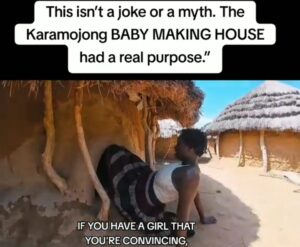
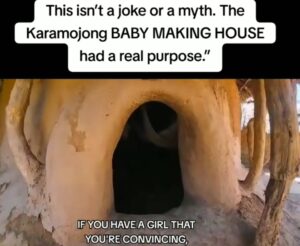
A circulating video depicting a cultural practice attributed to members of the Karamojong community has reignited debate over the intersection of tradition, gender rights, and evolving social norms in Uganda. The footage portrays a well-woven hut structure reportedly used to lure women inside, with an opening so narrow and complex that exiting becomes difficult once entry is made. The alleged intent, according to narrators in the video, is to compel conception.
While the authenticity and context of the specific incident require independent verification, the imagery has stirred strong reactions online, prompting broader reflection on cultural autonomy, consent, and the rights of women.
Cultural Context and Historical Identity
The Karamojong are a Nilotic pastoralist community with a rich cultural heritage rooted in cattle keeping, clan structures, and age-set systems. Historically, marriage customs across many pastoralist societies in East Africa have involved elaborate rituals—some symbolic, others physical demonstrations of readiness or commitment.
Anthropologists note that in pre-modern settings, practices surrounding marriage and reproduction were closely tied to lineage continuity, livestock alliances, and survival in harsh ecological conditions. However, as Uganda modernizes and legal frameworks expand, customs once regarded as normative are increasingly scrutinized under constitutional and human rights standards.
Consent and the Law
Uganda’s Constitution guarantees the rights to dignity, liberty, and freedom from degrading treatment. Additionally, national laws criminalize forced sexual acts and coercion. If a cultural practice intentionally traps or deceives women in a way that undermines their consent, legal experts argue that such acts would fall outside the protection of customary law.
Advertising

Customary practices are recognized under Ugandan law only insofar as they do not contravene statutory protections or constitutional principles. Therefore, any ritual that removes a woman’s agency or subjects her to involuntary sexual engagement would face serious legal and ethical challenges.
The Tension Between Tradition and Modern Rights
Across Africa, societies are grappling with how to reconcile heritage with evolving gender norms. In Karamoja itself, cultural transformation has accelerated due to urban migration, formal education, religious influence, and government development programs.
Local leaders in similar past controversies have often emphasized that not all practices portrayed online represent mainstream or widely accepted customs. Sometimes, isolated or outdated rituals are amplified in ways that risk stereotyping entire communities.
It is therefore essential to distinguish between cultural identity and potential abuse. Respecting tradition does not require endorsing practices that violate individual rights.
Voices of Women and Community Reform
Women’s rights advocates argue that meaningful cultural preservation must centre on consent and dignity. Increasingly, women from pastoralist communities are asserting their voices in redefining what marriage, courtship, and family formation should look like in contemporary society.
In many regions, elders and cultural institutions have demonstrated flexibility—modifying initiation rites, discouraging harmful practices, and promoting education for girls. Such reforms show that culture is not static but adaptive.
The Role of Media and Responsible Reporting
Viral videos can shape public perception rapidly. However, responsible journalism demands contextualization. It is important to avoid sensationalism while still raising legitimate concerns about potential rights violations.
Analysts caution against framing the Karamojong identity solely through controversial customs. Karamoja has also been the focus of significant resilience stories—improvements in security, women-led economic initiatives, and cultural festivals that celebrate heritage without compromising rights.
A National Conversation
The debate sparked by the video underscores a broader national question: how can Uganda uphold cultural diversity while safeguarding constitutional freedoms?
Balancing tradition with human dignity is not a rejection of heritage—it is a refinement of it. As the country continues to evolve socially and legally, practices that endure will likely be those that align with both community pride and universal rights principles.
The unfolding discussion offers an opportunity not just to critique, but to engage constructively—with cultural leaders, women’s advocates, policymakers, and scholars—to ensure that Uganda’s rich traditions thrive in ways that affirm, rather than constrain, human dignity.
#UgandaToday #PhoenixNewsFeeds #OperaNewsFeeds #Karamoja #CulturalDebate #HumanRights