


UgandaToday:🇺🇬 Slow Poison and the Golden Age of Arrogance, Stupidity & Willful Ignorance
Uganda’s Slow Moral and Institutional Decay Through the Eyes of Prof. Mahmood Mamdani

Director of Strategy and Innovation, Ideation Able Holding Ltd (Uganda)
Social Entrepreneurship Consultant
📧 Email: davidkafeero2@gmail.com
By David Kafeero
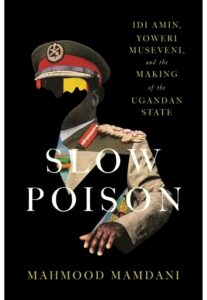
In his latest book, Slow Poison, renowned scholar Prof. Mahmood Mamdani delivers one of the most searing critiques of President Yoweri Museveni’s nearly 40-year rule — arguing that the regime has become “worse than the dictator it overthrew.”
Yet Slow Poison goes beyond political analysis. It mirrors what many Ugandans today describe as “The Golden Age of Arrogance, Stupidity, and Willful Ignorance.” Together, they paint the portrait of a nation quietly poisoned — morally, intellectually, and institutionally.
1️⃣ The Slow Poison: The Foundation of a Golden Age
Mamdani traces Uganda’s institutional decay to a slow but deliberate poisoning — through corruption, nepotism, and tribalism.
The so-called “Golden Age” represents the psychological outcome of this decay: a collective acceptance of decline, masquerading as stability. “Amin was a storm; Museveni is the fog that lingers.” — Mahmood Mamdani
2️⃣ From Revolutionary Promise to Institutionalized Mediocrity
When Museveni took power, he promised “fundamental change.”
Four decades later, Uganda appears trapped in a culture of performative politics and moral fatigue — where governance is survival, not service.The revolutionary dream has hardened into bureaucratic mediocrity. “At least we can now sleep,” people once said.
Today, the whisper is: “We no longer think.”
3️⃣ Arrogance and Ignorance as National Culture
Where Mamdani describes “theft becoming society,” Uganda’s Golden Age shows ignorance becoming prestige. Corruption is rationalized as patriotism. Citizens emulate the arrogance of the powerful.Academics and elites defend dysfunction in the name of “peace.” In this inversion of values, moral clarity is replaced by cynical pragmatism.
4️⃣ Fragmentation as Strategy, Confusion as Culture
Mamdani argues that Museveni deliberately tribalized the state to divide and rule.
The result is a society fractured by identity politics, gossip, and misinformation — where everyone talks, but no one learns. This fragmentation is no accident; it is the architecture of control.
5️⃣ The Fog of “At Least We Can Sleep”
The regime’s obsession with security replaced any national vision.
Stability became the only metric of progress.
But as Slow Poison and the Golden Age both warn, this mindset has produced a dangerous complacency — where peace is mistaken for progress, and slogans replace strategy.
6️⃣ The International Applause of Decay
Mamdani notes how the West celebrated Uganda’s “economic growth” while ignoring its moral collapse.
Today, that performance continues: endless conferences, hashtags, and “vision statements” masking a hollow core.This is not governance — it is theatre.
7️⃣ The Final Diagnosis
Uganda’s decline did not come suddenly. It arrived like a fog — a slow, creeping poison.
🧠 Slow Poison = Institutional rot.
💀 Golden Age = Cultural rot. Each feeds the other. Together, they have eroded the very imagination needed to rebuild.
8️⃣ The Takeaway: Reviving Moral Imagination
“Uganda’s greatest crisis is not poverty or politics — it is the death of moral imagination.”
The challenge before us is not only to change leaders but to unlearn arrogance, dismantle stupidity, and reject willful ignorance — before the fog of moral decay becomes our permanent identity.
🗣️ Hashtags
#UgandaToday #SlowPoison #MahmoodMamdani #GoldenAgeOfIgnorance #LeadershipCrisis #LegacyWealth #RegenerativeGovernance #3CRevolution