UgandaToday: Scathing Tirade: Aloysius Matovu Jr. Accuses CDF Muhoozi of Election Interference, Calls for Military to Back Off
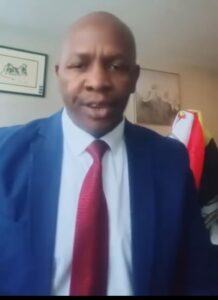
Kampala, Uganda — A fiery political statement by human rights advocate Aloysius Matovu Junior has ignited fresh debate over the role of Uganda’s military in the lead-up to the 2026 presidential and general elections. Matovu’s scathing remarks targeted General Muhoozi Kainerugaba, the Chief of Defence Forces (CDF) and son of President Yoweri Museveni, accusing him of attempting to interfere in the already volatile electoral process.
Matovu’s video tirade was sparked by Gen. Muhoozi’s recent pronouncement, in which he encouraged Ugandans to “cast their votes and go home” immediately after voting, asserting that security forces would safeguard their votes and maintain peace.
Army Has No Constitutional Role in Elections, Matovu Says
In a message delivered in Luganda, Matovu sharply rebuked Muhoozi, insisting that the Uganda People’s Defence Forces (UPDF) has no constitutional mandate to manage elections or influence electoral outcomes. He urged the military chief to back off from what he described as political overreach and warned against turning Uganda’s constitution into a casualty of political ambition.
Matovu used a potent analogy to underline his point, likening Muhoozi’s perceived meddling to a rapist who boasts about impregnating his victim, a metaphor aimed at highlighting what he termed the unconstitutional nature of military involvement in political affairs.
Citing Abductions, Torture, Rights Abuses
Without mincing words, Matovu cited abductions and torture of Ugandans, including Olivia Lutaaya, Eddie Mutwe and others allegedly held or harmed on orders linked to Muhoozi and security operatives — a claim reflecting widespread public concern about human rights abuses. (The specific cases referenced by Matovu are widely reported in public discourse and civil society commentary.)

He questioned how a figure perceived by many as responsible for alleged human rights abuses could position himself as a protector of votes, especially when the constitution explicitly allows voters to remain within sight of polling stations — up to a legally permitted distance — to observe the counting process.
Opposition Voices: ‘No Army in Elections’
Matovu’s message echoes broader concerns expressed by prominent Ugandans and civil society leaders about military involvement in elections.
Robert Kyagulanyi Ssentamu, also known as Bobi Wine, the National Unity Platform (NUP) presidential candidate and leading opposition figure, has repeatedly criticised what he describes as the weaponisation of security forces against political opponents. He has alleged intimidatory actions by security agents and warned against the use of state apparatus to suppress dissent and skew electoral outcomes.
Celebrities, politicians and civil society have long argued that the role of the army should be strictly constitutional — guarding borders and national security — and should not extend into the management or policing of elections.
Dr. Sarah Bireete, Executive Director of the Centre for Constitutional Governance and Chairperson of the East and Horn of Africa Elections Observers Network, has been explicit in similar criticism, observing that in elections she has monitored globally, armies are never deployed in domestic polls — with Uganda cited as a concerning exception. Bireete argues that the military’s involvement risk undermining voter confidence and democratic legitimacy.
Civil Society and Parliamentary Alarm
Beyond individual figures, civil society organisations and some members of parliament have decried the militarisation of electoral spaces. Observers have pointed to excessive force and unlawful detentions of opposition supporters during recent campaign events, raising alarm about the legitimacy of the upcoming elections if security agencies remain deeply involved.
A Nation at a Crossroads
Matovu’s forceful call for Gen. Muhoozi and the military to stand down from election administration adds momentum to a growing debate in Ugandan public life over democratic norms and constitutional governance. As the country approaches January 2026, tensions over electoral integrity, security roles, and political freedoms continue to shape national discourse.
Publisher