Political Sociologist
UgandaToday: Leaders Are Judged Not Just by Plans but by Methods
By Gertrude Kamya Othieno
Hindsight Is Not an Alibi
The newest defenses of Milton Obote argue that “anyone would have done the same”—that the Kabaka was not merely a cultural king but also the constitutional president, and that Obote’s development vision, enshrined in the Second Five-Year Plan (1966–71), deserves more weight than the 1966 crisis.
All of this is useful context. None of it dissolves accountability. Leaders are judged not only by what they plan but also by how they choose to wield power when tested.
The Roots of Rupture
Yes, the rupture did not begin in 1966. The Lost Counties referendum (1964) poisoned relations; the fragile UPC–Kabaka Yekka coalition made dual centres of authority inevitable; and Muteesa’s twin identity—as Kabaka of Buganda and President of Uganda—hardwired constitutional tension into the young state. These are facts. But they are the prelude, not the verdict.

The Method That Defined an Era
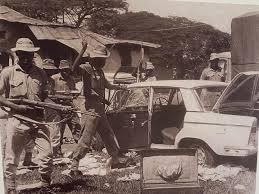
The verdict turns on the method. Faced with constitutional strain, Obote chose the army. He ordered the Lubiri stormed, ousted a sitting head of state (who was also the Kabaka), abolished the kingdoms, and personalised the military to secure his presidency.
That decision did not invent gun rule—colonial force preceded him—but it nationalised it. Obote moved the logic of the gun from the periphery of conquest to the centre of post-independence governance. That precedent became Uganda’s political grammar: Amin, Obote II, and later regimes all spoke it fluently.
To say “anyone would have done the same” is not analysis; it is the normalisation of a founding dictatorship.
Development vs Militarisation
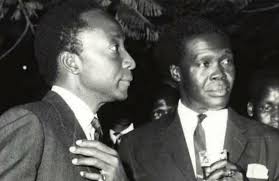
Acknowledging Obote’s developmental ambitions is not heresy. The Second Five-Year Plan aimed at Africanisation, industrialisation, and institutional growth. Some of its fruits were real and long-lasting.
But the political method shapes political memory. A planner who militarises the state writes the terms under which all future plans must operate. Uganda’s most enduring “infrastructure” from that era was not factories or roads—it was the template of the army entrenched in politics.
Buganda’s Mirror of Amnesia
For decades, many in Buganda remembered Obote chiefly as the man who dismantled a centuries-old institution and sent their Kabaka into exile. Yet, as present disappointments mount, some voices now recast him as a misunderstood nationalist.
Nostalgia does not arise from archives; it arises from comparison. When the present feels worse, the past acquires softer edges.
Museveni and the Cycle of Memory
The same cycle risks repeating with President Museveni. Buganda’s relationship with the current central government is tense—over land, autonomy, and cultural authority. Yet it was Museveni who restored the monarchy in 1993, reversing Obote’s abolition.
Today, that restoration is eclipsed by fresh grievances. Tomorrow, in the cooler light of hindsight, some may elevate it as an act of historical restitution and remember him more kindly than they do now.
This is not a prediction of sainthood; it is a description of how political memory works.
Buganda’s Long Negotiation
Since 1900, Buganda has negotiated sovereignty within shifting frameworks:
-
The colonial protectorate used Buganda as a pillar.
-
Obote smashed its institutional standing.
-
Amin deepened coercion.
-
Museveni restored the symbol while circumscribing its power.
Across these eras, Buganda has alternated between resistance and rehabilitation, often re-evaluating yesterday’s adversary when today’s bargain disappoints. This is not fickleness—it is survival. Communities remember selectively to endure the present.
The Honest Synthesis
Obote the planner existed; so did Obote the militariser.
The first built institutions; the second decided the terms on which institutions would live or die. Both truths belong in our historical ledger, but they are not equal in legacy. Plans can be replaced; precedents endure.
The decisive precedent of 1966 was that the army could settle a constitutional dispute and enthrone a presidency. That is why Uganda’s politics still breathe militarised air.
Responsible Memory vs Selective Memory
We should resist two temptations:
-
Flattening Obote into a cartoon villain and erasing his development efforts.
-
Laundering militarisation under the rhetoric of circumstance or national vision.
Hindsight that holds both truths is not selective memory; it is responsible memory.
The Warning for Today
Museveni’s restoration of the monarchy may one day be polished by nostalgia, his constraints upon it softened or forgotten. But just as with Obote, the method will outlast the moment.
If we are to break the cycle—Buganda’s cycle, and Uganda’s—we must refuse the comforting lie that “anyone would have done the same.”
Nations are not condemned by circumstances alone. They are shaped, for generations, by the choices leaders make when circumstances bite.
Gertrude Kamya Othieno
Political Sociologist
Alumna, London School of Economics (LSE)
Executive Director, ACP Community Research & Training Centre
Founder, Global People’s Network (GPN) – A supra-political movement dedicated to retelling Africa’s story and reimagining global justice.
📧 gkothieno@gmail.com
Publisher