Uganda Today: Kabaka 32 Years After Coronation: The Pillar of Uganda’s Fortitude
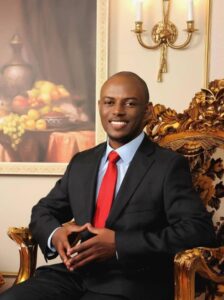
Authored by Dr. Dennis Daniel Ssemugenyi
(Author, Analyst, Pioneer EBTDI)
July 31, 2025.
Kabaka 32 Years After Coronation: The Pillar of Uganda’s Fortitude
“Let me begin by saying, “We thank God for the Kabaka.”
For in a time when nations stagger beneath the weight of uncertainty, we behold a monarch not merely crowned by tradition but anointed by destiny. In him breathes a power not born of conquest, but carved from continuity — a sacred current flowing through generations.
Wangaala ggwe Luwangula, Lukomannantawetwa, Kalalankoma, Kiryosserulanda, Omutanda wa Buganda, oli mpagi mu Uganda Ssabasajja Kabaka Muwenda Mutebi II gwe Jjinja eriyasoolwaazi!
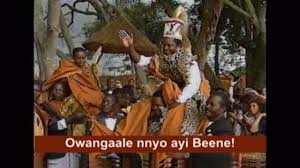
These are not names — they are thunderous echoes of ancestral prophecy. And in them lies not just reverence, but revelation. Revelation born from a legacy as ancient as the drumbeat of our land; leadership not sought, but summoned; and strength — not the kind that bruises, but the kind that builds, binds, and blesses.
In the heart of Uganda, where the spirit of our ancestors hovers like mist on the hills of Buganda, there rises a flame — unyielding, luminous, and divine. That flame is the Kabaka.
Not merely a vessel of royal blood, but the embodiment of unmatched resilience, cultural brilliance, and a transformative presence that has healed the wounds of silence and given voice to a kingdom reborn.
The Kabaka’s reign is not measured in ceremonial moments, but in the quiet, consistent power of leadership that restores, uplifts, and fortifies a people. Since his coronation in 1993 at Naggalabi Buddo, after decades of abolition, the Kabaka has carried the weight of history and the promise of restoration on his shoulders. He did not seek spectacle; he sought service. He did not demand attention; he earned unwavering admiration — not only from his people in Buganda but from Ugandans across all regions and tribes.
1993–1998: Rebuilding a Silenced Kingdom
After decades of abolition and systemic suppression, the first five years of his reign were marked by rebuilding — of institutions, cultural confidence, and spiritual continuity.
He worked tirelessly to reconstitute the Lukiiko, restore clan leadership, and revive the pride of a people who had been told to forget their identity. His public speeches from this era carried a tone of rebirth and defiant optimism, stating in 1994, “Our culture was never destroyed. It was only buried. We have now come to dig it up, dust it off, and live it anew.”
1998–2003: Advocating for Federo and Cultural Sovereignty
In this period, the Kabaka boldly demanded federalism (Federo)—not for secession, but as a structure that honors Uganda’s diversity.
Despite political pressure and media distortion, he remained calm, focused, and principled. He declared at Bulange in 2002: *“_True unity must not be forced. It must come from respect for difference. A nation that erases culture will one day erase itself._”*
2004–2009: Health, Land, and the Kayunga Crisis
Amid growing tensions over land reforms, the Kabaka stood firmly against policies that sought to weaken traditional land ownership. His land awareness campaigns educated thousands. In 2009, when he was barred from visiting Kayunga—a move that triggered deadly riots—the Kabaka refused to react with anger. Instead, he appealed for restraint and dialogue, reminding his people: “*We are not at war. We are at a crossroads. We must take the path that does not burn the bridge behind us.*”
2009–2013: Fire, Silence, and Unshaken Resolve
The burning of the Kasubi Royal Tombs in 2010 was not just a cultural tragedy—it was a symbolic assault. But the Kabaka, in his quiet way, mobilized restoration through the strength of the people. In his 2011 statement, he said: *“A tomb may burn, but a heritage lives on. What they sought to destroy, they only ignited more deeply in our hearts.* He oversaw fundraising, reconstruction, and the rebuilding of sacred ground not with bitterness, but with purpose.
2014–2018: Health Campaigns and Institutional Empowerment
This was a period of vibrant action. The Kabaka Birthday Run became a national platform to fight HIV/AIDS and cancer.
He used his personal example to destigmatize illness and promote routine health checks, especially among men.
In 2015, he declared: *“Let no man fear the truth of his health. Our strength as a people begins with the strength of our bodies*.” Cultural institutions expanded their influence in education, economic empowerment, and youth development across Uganda.
2019–2023: Resilience During a Pandemic and Beyond
COVID-19 disrupted life globally, but the Kabaka’s leadership never wavered. Despite personal health concerns in the past 3 years that raised public anxiety, he returned to the public eye with dignity, reminding Ugandans of the power of unity and vigilance. During these years, he intensified messages of hope, economic resilience, and cultural education—even in digital spaces.
At EBTDI (Every Birthday Tree Day Initiative), we are calling upon all those who love the Kabaka to plant 32 trees in honour of the 32 years of his reign. As we celebrate his enduring legacy, we also invite every Ugandan to adopt EBTDI’s meaningful tradition of planting a number of trees equal to their age on their birthdays. And on that day, let an extra tree be planted — in honour of the Kabaka, the living root of Uganda’s fortitude.
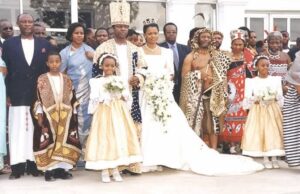
“A moment etched in Buganda’s heart: Kabaka Ronald Muwenda Mutebi II on his wedding day, stepping into royal matrimony with timeless dignity.”
Through cultural institutions, he has revitalized clan systems, reawakened language, and made Luganda not only a spoken tongue but a living pulse of identity.
Nowhere is this more vibrantly expressed than in the annual Masazza Cup — a brainchild of the Kabaka’s reign that has redefined community pride, youth engagement, and peaceful competition.
The tournament transcends football; it is a festival of identity where the spirit of Buganda is draped in jerseys and echoed in chants from every county. Through it, the Kabaka has united generations, restored the prestige of the Masazza (counties), and created a powerful platform where talent meets tradition and where sport becomes a bridge to purpose.
But what moves me most is not just what the Kabaka has done — it is how he has done it. With quiet strength. With timeless dignity. With unwavering discipline. In a world obsessed with spectacle, the Kabaka has remained grounded. In a country still scarred by political theatrics, he has remained still — and in that stillness, he has been immovable.
There is something about the Kabaka that makes every Ugandan — whether Musoga, Acholi, Itesot, or Banyankole — feel a sense of belonging. Because resilience is not ethnic. Strength is not tribal. Dignity is not political. These are virtues that speak to the deepest part of who we are as a people.
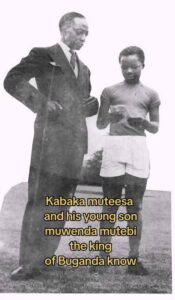
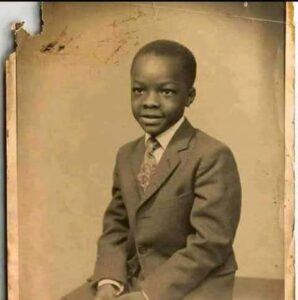
“The son of a King, the future of a Kingdom—Prince Mutebi appears to read a message beside his father, Sir Edward Muteesa II.”
I have spoken to elders in the North who revere him. I have sat with youth in Kampala who wish their leaders would emulate him. I have seen women in markets and businesspeople in boardrooms alike quote him with pride. That is the rarest form of national unity — not legislated, but earned.
The Kabaka’s names — Luwangula (conqueror), Lukomannantawetwa (unshakable), Kalalankoma (undisputed), Kiryosserulanda (empowerer/multiplier), and Jjinj’eriyas’olwaazi (the stone that shatters the rock) — are not poetic exaggerations.
They are reflections of lived reality. Each name is a milestone in our collective journey, a chapter in our national story.
Uganda owes him not just admiration, but a deep debt of gratitude. For being the example of what it means to be rooted in culture yet open to progress. For reminding us that our past is not a weakness, but a source of strength. For showing that true leadership is not about who shouts loudest, but who listens deepest. For being a father to millions who may never set foot in Mengo, but who feel his influence in the way they live, speak, and hope.
As I write this, I am reminded that pillars don’t move, but they hold up everything around them. That is what the Kabaka has been for Uganda. A foundation. A shield. A beacon. A rebirth. A future.
May his legacy live on in every corner of this country. May his discipline inspire generations of leaders to come. May his example redefine leadership not as a throne to sit on, but as a burden to carry with love, strength, and vision.
Wangaala Ssabasajja Kabaka. You are the living proof that culture is power, and resilience is royalty. Uganda sees you. Uganda honours you. Uganda rises with you.
As Uganda approaches another election, the Kabaka’s voice remains a quiet yet unshakable compass.
For instance, in 2021, while addressing concerns about violence and human rights abuses during the general elections, the Kabaka offered a voice of compassion and clarity. He reminded the nation:
“_People should not be arrested, tortured or killed simply because they hold different views. This must stop._”
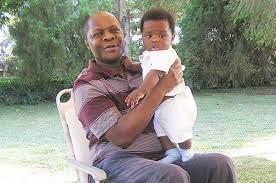
“_We must be brave and avoid keeping silent about issues that affect our people and our areas. The leadership that will build a strong kingdom and Uganda as a whole must respect human rights, freedom of worship and culture. Our people must be given a chance to voice out their concerns and be able to shape their destiny.__”
We remember those words not as a fleeting comment, but as a national call to conscience — a moment when, in the darkness of fear, the Kabaka’s voice became light.
His calls for dignity, justice, and peace — made consistently during moments of national tension — remind us that the Constitution is not just ink on paper, but the very soul of a nation. In times when democracy feels fragile and fear clouds public life, Ugandans find hope in the Kabaka’s wisdom — a voice that governments cannot easily ignore.
His presence brings reassurance; his words, calm amid storm. And when he speaks, it is not as a seeker of power, but one who embodies it, a guardian of the people’s spirit — a reminder that in unity, truth, and mutual respect, there is safety.
LONG LIVE THE KABAKA OF BUGANDA
RONALD FREDRICK KIMERA MUWENDA MUTEBI II.
📍 Website: https://www.ugandatoday.co.ug
📱 WhatsApp: +256 702 239 337
🐦 X (formerly Twitter): @uganda43443 |
📧 Email: ugandatodayedition@gmail.com
Let’s help you grow your brand and keep your audience informed. Partner with Uganda Today—where your story matters in shaping the social and economic dynamics of the country.
Publisher
-
Published by Uganda Today, your trusted source for news and analysis. Let’s help you grow your brand and keep your audience informed.
Advertising
Partner with Uganda Today where your story matters in shaping the social and economic dynamics of the country.
Website: https://www.ugandatoday.co.ug/about-cmk
WhatsApp: +256 702 239 337
X (formerly Twitter): @uganda43443 |
Email: ugandatodayedition@gmail.com