UgandaToday: Uganda’s 40-Year Leadership Marathon: How President Yoweri Museveni Has Outlived His Early Cabinet and Re-written the Rules
Byline: Kampala – Special Political Report
As Uganda approaches the milestone of four decades under President Yoweri Museveni’s leadership, a stark fact emerges: many of the people who once stood in his early years of inner-cabinet ranks are no longer with us. Museveni, meanwhile, continues to seek another term — raising fresh questions about promises made and constitutional safeguards removed.
Outliving the old guard
When Museveni assumed office in January 1986, many of his then-senior ministers and deputies were young, energetic and trusted allies. Among them in the first decade of his presidency picked randomly were:
-
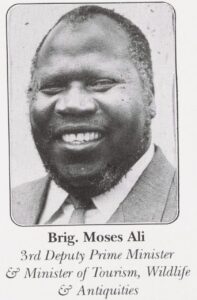
Brigadier Moses Ali (then 3rd Deputy Prime Minister & Minister of Tourism, Wildlife & Antiquities)
Advertising
-
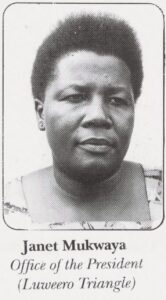
Janat Mukwaya (Office of the President, Luweero Triangle)
-
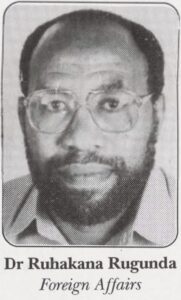
Ruhakana Rugunda (Minister of Foreign Affairs)
-
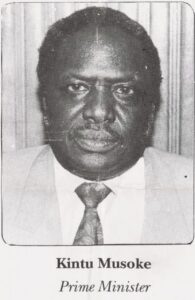
Kintu Musoke (Prime Minister)
-
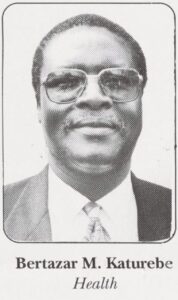
Bertazar M. Katureebe (Health)
-
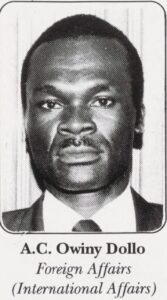
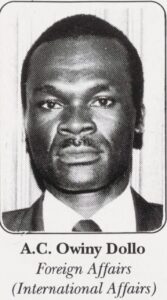
A. C. Owiny Dollo (Foreign Affairs Minister/International Affairs)
-
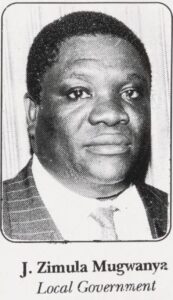
J. Zimula Mugwanya (Local Government)
-
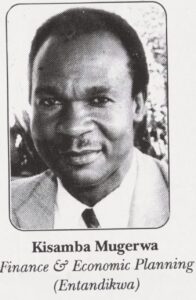
Kisamba Mugerwa (Finance & Economic Planning, Entandikwa)
-
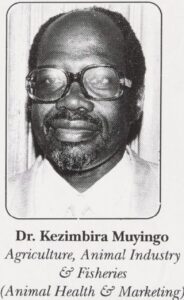
Dr Kezimbira Muyingo Agriculture Animal Industry & Fisheries – (Animal Health & Marketing)
-
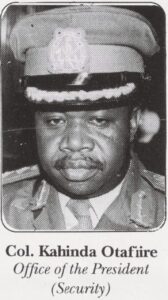
Col. Kahinda Otafiire Office of the President – (Security)
-
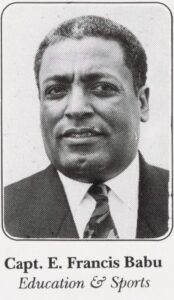
Capt. E. Francis Babu (Education & Sports)
-
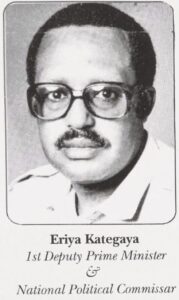
Eria Kategaya 1st Deputy Prime Minister & (National Political Commissar)
-
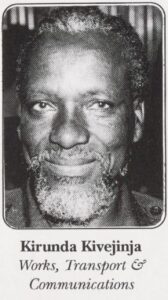
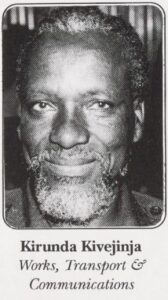
Kirunda Muwabe Kivejinja (Works, Transport & Communications)
-
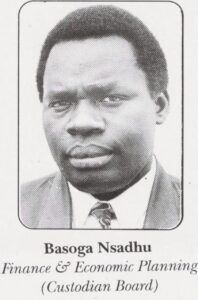
Basoga Nsadhu Finance & Economic Planning (Custodian Board))
-
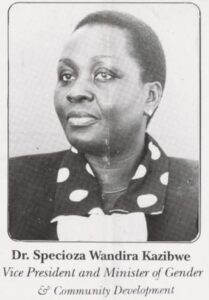
Dr Specioza Wandira Kazibwe (Vice President & Minister of Gender & Community Development)
-
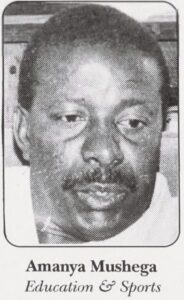
Amanya Mushega (Education & Sports)
-
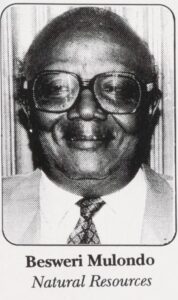
Besweri Mulondo (Natural Resources)
-
Henry Kyemba (Office of the President)
-
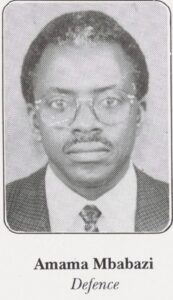
Amama Mbabazi (Defence)
-
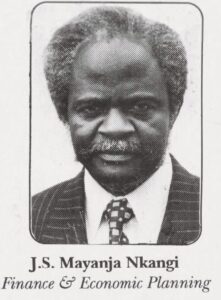
J. S. Mayanja Nkangi (Finance & Economic Development)
-
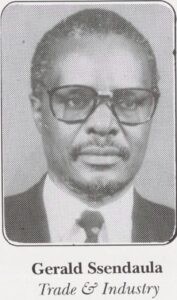
Gerald Ssendaula (Trade & Industry)
-
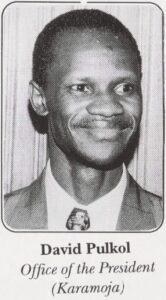
David Pulkol (Office of the President – Karamoja)
-
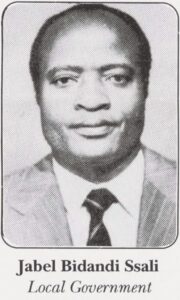
Jaberi Bidandi Ssali (Local Government)
-
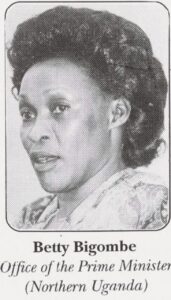
Betty Bigombe (Office of the Prime Minister – Northern Uganda)
While not all names are easily traceable in the public domain regarding life and death status, previous media analysis of Museveni’s 1986 cabinet suggests that by 2016 only four of the original 48 ministers survived in active roles. By 2022, one report noted that of a 29-member 1986 cabinet, only two remained in office.
Putting that into rough percentage terms: if only 2 of 29 remain, then 27 out of 29 are no longer in their original posts (a 93% attrition rate). If conservatively extended to the longer list above (say 24 names), and assuming e.g., only 2 remain in active high-office today, roughly ≈ 92 % of the listed figures have either died, retired or been removed. In short: Museveni has out-lived most of his early comrades.
From last-term promise to rewriting the rules
In 2001, after winning a second five-year term, Museveni stated in his manifesto that he was offering himself for a “last presidential term”. Four years later in 2005, legislators, under his party’s influence, removed the presidential two-term limit from the constitution.
In a 2012 interview on the NTV talk show On the Spot, hosted by Patrick Kamara, Museveni declared that he would not lead Uganda beyond the age of 75. Yet in 2017 the constitution was amended to remove the presidential age limit (previously 75) entirely, permitting him to stand again.
Looking back further: at his inauguration in 1986 he warned that “the problem of Africa in general, and Uganda in particular, is not the people but leaders who want to overstay in power.”
The 40-year question
Now in his 40th year of rule, Museveni remains the constant in Uganda’s leadership — even as the men and women who once formed his cabinet have fallen away through death, retirement or removal. This continuity has many advantages: institutional memory, a stable central figure, and the ability to steer long-term policy. But critics say the price has been weakened democratic turnover, entrenched power and compromised accountability.
The 2001 promise of “last term” is now seen by some as a rhetorical device; the 2005 and 2017 constitutional changes are evidence of structural adaptation to extend stay in power. His 2012 pledge about the age cap likewise appears to have been superseded by political reality.
With Museveni now seeking what will be his seventh term in office — once again changing the rules to permit it — the contrast between leader and cabinet has never been sharper: while most former ministers are gone, the president persists.

Reuters

Reuters

AP News
hashtags
#UgandaPolitics #Museveni #FourthDecadePlus
#DemocracyMatters
Publisher