UgandaToday: General Muhoozi Issues Fresh Threats to Monitor and NTV Over Coverage
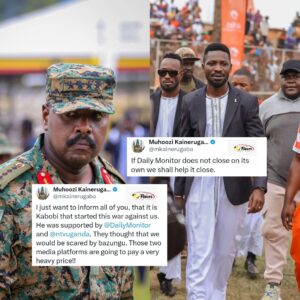
KAMPALA — In a dramatic escalation of tensions between Uganda’s military leadership and independent media, General Muhoozi Kainerugaba, the Chief of Defence Forces (CDF) and the son of President Yoweri Museveni, has publicly rebuked two of the country’s leading media houses — Daily Monitor and NTV Uganda — accusing them of facilitating opposition activities aimed at destabilising the country.
In a series of statements that have reverberated across political and media circles, Gen. Muhoozi asserted that both outlets are allegedly assisting opposition leader Robert Kyagulanyi Ssentamu, commonly known as Bobi Wine, to solicit support from European actors. According to Gen. Muhoozi, this support is part of what he terms a “destabilisation strategy of Uganda” — a claim that has intensified scrutiny on the role of independent media during the heightened post-election period.
Accusations Against Media and Opposition Support
Gen. Muhoozi’s comments come amid ongoing disputes following Uganda’s 2026 general election, in which Bobi Wine rejected the outcome and accused state actors of undermining the electoral process. The opposition leader has reportedly been in hiding since mid-January after military forces raided his home compound, an incident that sparked international attention and condemnation.
In this context, the CDF’s allegations against Daily Monitor and NTV Uganda link the two media organisations to an international campaign by Bobi Wine and his supporters to garner diplomatic and civil society backing in Europe. While Gen. Muhoozi has not publicly produced evidence of direct collusion, his narrative frames foreign engagement with opposition figures as a threat to national stability.
Media Freedom and National Security Concerns
Daily Monitor and NTV Uganda — two of Uganda’s most widely followed independent news outlets — have been at the centre of government scrutiny for their coverage of opposition politics and post-election developments. Both organisations have faced regulatory pressure in the past and have defended their reporting as critical to democracy and public accountability.

Media rights advocates argue that threats against press freedom, particularly in a sensitive political environment, may undermine public trust and restrict the flow of information. They stress the importance of balanced reporting and caution against conflating independent journalism with political partisanship.
Opposition Response and International Dimensions
Robert Kyagulanyi and his legal team have taken their dispute with government authorities to international platforms, appealing to global human rights bodies and development partners to condemn what they describe as human rights violations in Uganda. Critics of the government have called on European institutions and other partners to apply diplomatic pressure, an appeal that appears to have drawn the ire of Gen. Muhoozi.
Meanwhile, government spokespeople have declined to comment directly on the accusations against the media houses, reiterating instead that national security is paramount and that foreign interference — whether real or perceived — should be resisted.
A Nation at a Political Crossroads
As tensions between state security organs, opposition figures, and independent media escalate, Uganda finds itself navigating a fraught political landscape. The interplay between press freedom, national security, and international influence underscores the complexity of governance in the post-election era.
Observers warn that continued antagonism between government officials and media actors could deepen divisions within Uganda’s public sphere and risk further constraining democratic expression.
Hashtags
#UgandaPolitics #MediaFreedom #MuhooziKainerugaba #BobiWine #PressFreedom #UgandaToday #PhoenixNewsFeeds
Publisher