
UgandaToday: From Boycott to Buy-in: NUP’s U-Turn and the Politics of Signing IPOD’s MoU
By Uganda Today Political Desk
Prologue
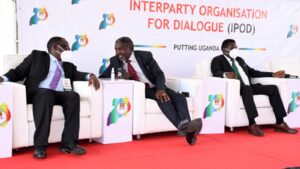
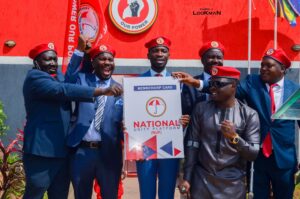
For years, the National Unity Platform (NUP) had kept its distance from the Inter-Party Organisation for Dialogue (IPOD), denouncing it as a talk shop lacking substance and legitimacy. But in a dramatic reversal, NUP has now indicated it will sign the Memorandum of Understanding (MoU) to formally join IPOD — a decision that is raising eyebrows among different political players and underscoring the growing tension between principle and pragmatism in Uganda’s political space.
The Shift: What Changed?
Legal Pressure and Funding Levers
In June 2025, President Museveni assented to an amendment of the Political Parties and Organisations Act, tying access to government political party funding to membership in IPOD. After the amendment, parties outside IPOD in effect wouldn’t access allocations disbursed by the Electoral Commission.
The Attorney General and IPOD’s own directorate responded by confirming in court filings that parties must express interest, satisfy procedural requirements, and subsequently sign the MoU to become full IPOD members. In a letter dated October 10, 2025, NUP’s interest in signing was acknowledged and guidelines for entry were clarified.
Court Battle and Political Calculus
Meanwhile, NUP’s leadership challenged the amendment in the Constitutional Court, arguing that the process was discriminatory, lacked consultation, and effectively excluded them from funding. But the party acknowledged that court processes may take years, leaving it with a difficult choice: stay principled and resource-starved, or engage and stay relevant.

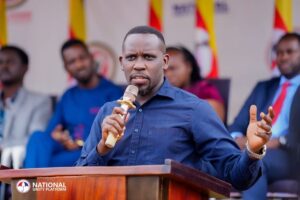
Financial Constraints for NUP to close boycott curtains: Secretary General David Lewis Rubongoya stated in his letter to IPOD, that while the party awaits a court ruling, it will comply with the law by signing the MoU. In a separate interview, he argued that the amendments were targeted at NUP and implemented without proper consultation. A party insider also noted financial strain: many departments had pending programs but lacked funding. In its statement, NUP insists the move is conditional — signing “the current MoU” does not mean abandoning its legal challenge.
Reactions: Cheers, Boos, Skepticism
A wave of backlash greeted NUP’s decision. Some opposition supporters accused the party of inconsistency and compromise. As one commentator wrote The move is seen by many as a tactical retreat under financial pressure, rather than a principled shift.
Political Observers’ View
Analysts interpret this as a pragmatic recalibration. While NUP had legitimate criticisms of IPOD, its organizational survival — especially ahead of the 2026 elections — may depend on access to institutional resources and political relevance. Some see the decision as forced by structural constraints rather than voluntary accommodation.
Government & IPOD Reaction
The government and IPOD responded by defending the new legal regime. They maintain that the amendment is lawful, and that only parties willing to sign and engage with IPOD can receive public funding. The Electoral Commission also argued that NUP’s court application is now moot, given that disbursements have already been made to IPOD member parties.
What the MoU Signing Could Mean For NUP?
-
Access to funding & legitimacy: Signing the MoU may restore NUP’s eligibility to receive government political party funds.
-
Political space: As an official IPOD member, NUP may have greater pathway to dialogue, influence, and institutional access.
For IPOD & Opposition Unity
-
Stronger opposition bloc: NUP’s participation may strengthen coordination and broaden IPOD’s diversity.
-
Diluted critique: Critics worry IPOD may lose potency as a platform for bold dissent if opposition parties become too entangled with government structures.
-
Internal tensions: Divergent visions within IPOD — from cooperative engagement to confrontational politics — may lead to friction.
#NUP #IPOD #UgandaPolitics #MoU #OppositionUnity #PoliticalDialogue #FundingPolitics #ConstitutionalChallenge #2026Elections #MultipartyUganda
Publisher