
UgandaToday: East Africa’s Institutional Memory Crisis: Uganda’s Structural Illness Now Spills Towards Kenya

Director of Strategy and Innovation, Ideation Able Holding Ltd (Uganda)
Social Entrepreneurship Consultant
📧 Email: davidkafeero2@gmail.com
By Kafeero David – Diaspora NSSF Member
East Africa’s most persistent political problem has never been lack of intelligence, leadership, or resources—it is the region’s poor institutional memory. And once again, just as in the 1970s, Uganda has become the epicentre of a structural crisis with spillover risks for its neighbours.
Ugandan political analyst David Kafeero argues that the region is repeating old mistakes that were documented—but never acted upon—by the Odoki Commission and forewarned by history.
Bonhoeffer, Uganda, and System-Engineered Stupidity
German theologian Dietrich Bonhoeffer taught that stupidity is not an intellectual defect but a political condition manufactured by authoritarian systems.
Uganda offers a textbook example:

-
When propaganda overrides truth,
-
When power is centralised to breaking point,
-
When institutions collapse,
-
When citizens live in fear,
the result is collective political blindness—a system-induced paralysis that once enabled the rise of Idi Amin and continues to shape Uganda’s governance trajectory today.
Tanzania: A Past Victim of Uganda’s Structural Failure
In the 1970s, Tanzania became an accidental combatant—not out of ambition, but because Uganda’s internal dysfunction spilled across borders.
Amin’s regime was born from:
-
Crumbling institutions
-
Ethnic manipulation
-
A suffocating unitary presidency
-
Power divorced from the population
-
A frightened, disempowered society
Unable to self-correct, Uganda pulled Tanzania into a war it never wanted. Tanzania learned from it. Uganda did not.
The Odoki Commission: A Missed Cure
Between 1988 and 1992, the Odoki Constitution Commission delivered the clearest diagnosis of Uganda’s chronic illness:
-
Excessive centralisation
-
Ethnicised political competition
-
Excluded and marginalised regions
-
A presidency too powerful to be checked
-
Institutions too weak to ensure accountability
Odoki’s proposed remedy was equally clear:
→ Rebuild Uganda through regional governance, devolved power, and balanced executive authority.
This was not political theory—it was a survival manual.
But Uganda shelved it. The region ignored it.
East Africa’s Selective Learning Curve
While Uganda drifted, others acted:
-
Tanzania strengthened political buffers.
-
Kenya entrenched devolution and independent institutions.
-
Rwanda enforced disciplined governance.
Yet, East Africa continued treating Uganda as dramatic entertainment rather than a structurally unstable state capable of exporting crises.
Today: Kenya Faces the Risk Tanzania Faced in 1978
The warning signs that once preceded regional instability have resurfaced:
-
An over-concentrated presidency
-
Patronage-driven governance
-
Shrinking regional autonomy
-
Emotional, reactionary leadership
-
Media confusion and state-driven propaganda
-
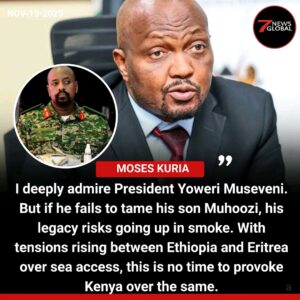
Rising hostility toward neighbouring states
Kenya now finds itself where Tanzania stood four decades ago—forced to react to dysfunction it did not create.
Uganda’s Crisis Is Structural, Not Personal
Uganda’s political troubles have never been about individuals. They are rooted in a distorted governance structure that breeds instability at home and exports tension abroad. The only credible solution remains the one Odoki spelled out:
– Re-balance executive power
– Restore regional governance
– Rebuild institutional autonomy
Everything else is cosmetic—an evasion, not a cure.
Conclusion: Honour Odoki or Repeat History
Uganda’s current turmoil reflects Bonhoeffer’s concept of system-created stupidity—a predictable outcome of centralised, authoritarian governance.Tanzania learned this lesson through war.Odoki documented the antidote. Uganda ignored it. Now Kenya stands in the blast radius of Uganda’s untreated structural illness.
Ignore structure, invite instability.
Honour Odoki to prevent repetition.
Uganda Today Disclaimer
The views, analyses, and opinions expressed in this article are solely those of the author, Kafeero David, and do not necessarily reflect the official editorial position of Uganda Today or its affiliates. The publication presents this content in the interest of public dialogue, historical reflection, and regional policy discourse. Uganda Today encourages open, evidence-based debate and remains committed to balanced, responsible journalism. Readers are advised to interpret the arguments herein within the context of scholarly and political analysis.
Hashtags
#UgandaToday #EastAfricaPolitics #OdokiCommission
#RegionalStability #UgandaKenyaTensions #InstitutionalReform
#KafeeroAnalysis #UgandaGovernance #EastAfricanCommunity
Publisher