UgandaToday: Choosing Their Grandchildren: How Norway Turned Oil Into Forever—and What Uganda Can Learn Now
By: Uganda Today
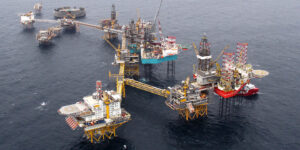
Lead In 1969, Norway struck oil at the Ekofisk field and made a decision that would defy political gravity: save almost everything, spend almost nothing, and invest for people not yet born. Three decades later, Norway’s Government Pension Fund Global (GPFG) is worth over $2 trillion, funds a quarter of the national budget without depleting the principal, and earns more from markets than from selling oil. For countries like Uganda—on the cusp of large-scale production in the Albertine Graben—Norway’s discipline offers a practical playbook to avoid the resource curse and build permanent, shared prosperity.
The Moment Norway Chose the Long Game
In 1990, Norway established the GPFG on three deceptively simple rules:
- All oil profits flow into the fund.
- The fund invests globally and broadly, largely through low-cost, passive strategies.
- Government can withdraw only a small share of the fund’s expected long-term real return (originally 4%, now 3%).
The first deposit—$150 million in 1996—was modest. The breakthrough was discipline. Through elections, recessions, and crises, politicians refused to raid the fund. Instead of gambling, managers bought small stakes across nearly 9,000 companies in about 70 countries. By 2000 the fund hit $50 billion; by 2010, $500 billion; by 2017, $1 trillion; today, more than $2 trillion—roughly $340,000 per citizen.
Crucially, more than half of that value came from investment returns, not oil itself. The fund now generates more income from its portfolio than Norway earns from selling oil and gas. The 3% spending rule finances around a quarter of the national budget without touching the principal—effectively turning a depleting resource into a perpetual endowment.

What Uganda Faces: Promise and Peril
Uganda’s oil can expand fiscal space, catalyze infrastructure, and create jobs. But the hazards are real: Dutch disease (a stronger shilling hurting farmers and manufacturers), boom-bust cycles tied to oil prices, elite capture, opaque contracts, and environmental damage. The core challenge is converting finite oil into permanent, diversified wealth while shielding communities and ecosystems in the Albertine region.

Five Pillars of Norway’s Model—and How Uganda Can Adapt Them
- Institutional Architecture: Clear Roles, Single Discipline
- Norway’s system separates policy (Ministry of Finance), oversight (Parliament), and execution (an independent investment arm).
- Uganda can codify a single fiscal anchor: a binding “permanent income” rule that caps oil-funded withdrawals at about 3% of the fund’s expected real return. Ring-fence petroleum cashflows into a sovereign wealth fund (SWF) with two windows: stabilization (short-term shocks) and savings (intergenerational wealth). Separate policy, regulation, and operations to avoid conflicts of interest.
- Save First, Spend Predictably
- Norway resisted “just this once” raids.
- Uganda should prioritize saving from day one, avoid front-loading megaprojects on optimistic price forecasts, and use the stabilization window only to cushion downturns—not to expand recurrent spending. Add a debt brake to prevent borrowing against future oil except for independently appraised, high-return projects.
- Invest Globally, Diversify Relentlessly
- Norway invests abroad across equities, bonds, and real assets to reduce costs and political pressure.
- Uganda should invest mostly outside the country to avoid overheating and currency appreciation, adopt low-fee index strategies with clear benchmarks, and keep the SWF off-limits to domestic pet projects. Domestic development should be funded through the normal budget with rigorous appraisal.
- Radical Transparency and Public Trust
- Norway discloses holdings, returns, decisions, and ethics exclusions.
- Uganda can publish quarterly inflows/outflows, asset allocation, performance versus benchmarks, and independent audits. Mandate parliamentary debates on the fund’s annual report. Join and fully implement EITI standards. Criminalize misreporting, enforce conflict-of-interest rules, and provide open data on contracts and production.
- Ethics, Environment, and the Energy Transition
- Norway excludes companies that violate human rights or devastate the environment.
- Uganda can adopt ESG screens with public exclusions, protect sensitive ecosystems, and reserve a share of revenues for restoration and climate resilience. Importantly, invest the budgeted share in human capital—education, health—and in trade-enabling infrastructure and digital/green industries for a post-oil economy.
How to Avoid the Resource Curse: The Uganda-Specific Playbook
- Strengthen the legal backbone: Enshrine the spending cap in law; require a super majority to change it; define narrow, time-bound emergency clauses.
- Build an independent guardian: Create a professional SWF with a non-partisan board, fixed terms, and external custodians; mandate regular performance and compliance audits.
- Practice budget discipline: Channel oil to long-term development, not payroll expansion; cap off-budget projects and bring all liabilities into a transparent medium-term framework.
- Manage the macro-economy: Sterilize excess FX inflows, safeguard central bank independence, and publish clear intervention and inflation targets.
- Design realistic local content: Emphasize skills and supplier development over blanket quotas that raise costs.
- Forge a community compact: Guarantee benefit-sharing with oil-impacted districts, audited local spending, and strong grievance mechanisms.
Uganda’s Next 12 Months: A Practical Checklist
- Pass a binding fiscal rule capping annual oil withdrawals near 3% of expected real returns.
- Establish the SWF’s charter, investment policy, and ethics guidelines; appoint a credible, independent board.
- Launch a public oil revenue portal with contract summaries, production forecasts, and fiscal flow projections.
- Commission independent cost-benefit reviews for major oil-linked infrastructure to avoid white elephants.
- Start a skills and supplier-readiness program to align Ugandan firms with global standards.
Uganda’s 3–5 Year Horizon: Locking in Resilience
- Achieve full EITI compliance with machine-readable disclosures and third-party assurance.
- Build a globally diversified, low-fee core portfolio; integrate climate-transition risk analytics.
- Create separate stabilization and intergenerational sub-funds with explicit rules and triggers.
- Institutionalize a “green dividend”: dedicate a defined share of oil-funded budgets to education, primary healthcare, agricultural productivity, and broadband/connectivity.
- Enforce environmental safeguards and restoration funds for the Albertine Graben.
What Makes Norway’s Model Transferable
- Simplicity: A few clear rules beat complex systems prone to loopholes.
- Predictability: A credible spending cap stabilizes currency, inflation, and rates.
- Distance from politics: Rules-based investing reduces patronage and speculation.
- Transparency: Public scrutiny deters corruption.
- Intergenerational equity: Designing for the long term aligns politics with prosperity.
What Not to Copy
- Monumentalism: Prestige projects with weak returns.
- Pro-cyclical spending: Splurging in booms, cutting in busts.
- Domestic asset concentration: Loading the SWF with local equities or special projects.
- Forecast optimism: Building budgets on rosy price and production scenarios.
The Bottom Line
Norway’s genius was not discovering oil—it was refusing to squander it. By saving aggressively, investing globally, and spending predictably, Norway transformed a volatile resource into a perpetual income stream that will outlast the last barrel. Uganda can do the same: legislate a strict spending rule, invest abroad, publish everything, protect nature and communities, and spend steadily on people and productivity. The discipline will be tested in every election cycle and every price shock. The prize is generational: schools and hospitals that outlive the oil itself.
“They chose their grandchildren over themselves.” Norway’s lesson for Uganda: write the rule, save the windfall, invest globally, and let the nation compound.
#UgandaToday #PhoenixNewsFeeds #OperaNewsFeeds #NorwayOilFund #GenerationalWealth #Uganda
Publisher