UgandaToday: Cameroon’s 2025 Presidential Vote: A Mirror for Uganda’s Impending Political Crossroads
By Uganda Today Political Desk
As Cameroon awaits official confirmation of the October 12th presidential election results, the unfolding political drama in Yaoundé offers striking parallels—and sharp warnings—for Uganda’s own electoral path early next year.
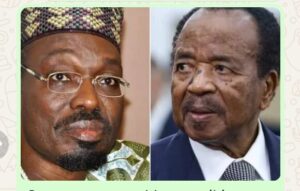
Opposition candidate Issa Tchiroma Bakary, who recently broke ranks with President Paul Biya’s long-entrenched government, has declared victory ahead of official results, boldly asserting, “Our victory is clear. It must be respected.” His pronouncement has electrified Cameroon’s political landscape, pitching the 92-year-old Biya—one of Africa’s longest-serving rulers—against a tide of popular frustration and fatigue with dynastic power.
The Cameroonian Constitutional Council is expected to release official results by October 26, 2025, amid government warnings against premature announcements and fears of post-election unrest.
Cameroon’s Electoral Mood: A Revolt Against Time and Power
Over 8 million Cameroonians participated in the October 12th vote, a symbolic moment in a nation where President Biya’s 43-year rule has often been described as an “administrative monarchy.” His bid for an eighth term, despite frail health and growing domestic discontent, has sharpened calls for generational change.

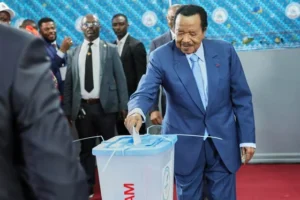
Bakary’s rise—a former minister turned reformist rebel—embodies a new spirit of defiance in Central African politics. His campaign, powered by digital mobilization and grassroots enthusiasm, broke traditional fear barriers in regions once tightly controlled by the ruling party. With 55,000 local and international observers, including teams from the African Union, the election was arguably one of the most scrutinized in Cameroon’s modern history.
Yet, the prevailing anxiety remains whether Biya’s system will allow a genuine transfer of power or reassert its control through state machinery—an issue that eerily resonates in Uganda.
The Ugandan Parallel: Echoes of Longevity and Resistance
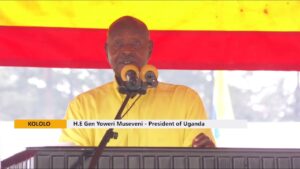
As Uganda prepares for its 2026 general elections, the Cameroonian experience serves as both an omen and a mirror. President Yoweri Kaguta Museveni, in power since 1986, is seeking yet another term, extending his rule toward the four-decade mark—almost matching Biya’s 43-year tenure.
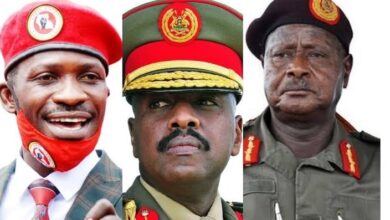
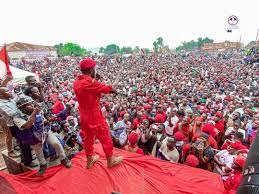
The Ugandan opposition, led by Robert Kyagulanyi Ssentamu (Bobi Wine) and other emerging challengers, faces circumstances reminiscent of Bakary’s crusade: entrenched incumbency, state security dominance, and a populace torn between resignation and hope.
Both Uganda and Cameroon share a political architecture built on personalized rule, where institutional independence is often subordinated to the executive. In both countries, electoral commissions, constitutional courts, and security apparatuses have historically aligned with incumbency. The uncertainty surrounding Cameroon’s pending results underscores how power transitions in such contexts depend less on the ballot and more on the political will of ruling elites to yield.
Africa’s Ageing Power Question
In his celebrated critique of Africa’s leadership crisis, former U.S. President Barack Obama once remarked that “80% of the world’s problems involve old men hanging on—afraid of death and insignificance.” Nowhere does this observation ring louder than in Cameroon and Uganda, where two aging leaders symbolize the continent’s generational gridlock.
Biya at 92 and Museveni at 81 have both defied time, dissent, and reform pressures. Both maintain control through a fusion of military loyalty, patronage networks, and constitutional manipulations. Yet beneath their political fortresses, the social currents are shifting—driven by youth disenchantment, economic stagnation, and digital political mobilization.
What Uganda Can Learn from Cameroon’s Ballot Moment
Cameroon’s tense post-election environment offers three cautionary lessons for Uganda:
-
Premature Victory Declarations Can Fuel Instability – Bakary’s early proclamation risks polarizing the electorate and giving security agencies justification for a crackdown. Ugandan actors must guard against similar provocations.
-
Generational Change Needs Institutional Grounding – Without credible institutions, even popular revolts against old regimes risk being co-opted or crushed. Uganda’s Electoral Commission must earn public trust beyond state affiliation.
-
The Age of Political Fatigue – The Cameroonian voter turnout reflects citizens’ yearning for renewal. Uganda’s youth majority could mirror this sentiment in 2026, translating frustration into a democratic statement—if the vote is perceived to matter.
As the Cameroon Constitutional Council prepares to pronounce the final verdict, Africa watches closely. Whether Biya concedes or clings, the decision will echo far beyond Yaoundé—into Kampala, Harare, and every African capital where power has overstayed its welcome.
Uganda now stands on the threshold of its own defining test: whether it will follow the familiar script of recycled leadership or write a new chapter in Africa’s democratic story.
Hashtags
#UgandaToday #PhoenixNewsFeeds #OperaNewsFeeds #CameroonElections2025 #UgandaDecides2026 #AfricanDemocracy #BiyaVsBakary #Museveni2026 #PowerAndTransition
Publisher