UgandaToday: A Musoga boy’s Perspective of How Museveni Has Manipulated Citizens to Stay in Power for 40 Years
Uganda Today | Investigations Desk
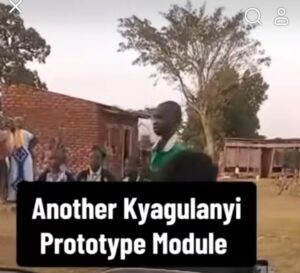
A short but piercing mock school debate by a young Musoga boy has ignited renewed national conversation on one of Uganda’s most enduring political questions: how President Yoweri Kaguta Museveni has managed to retain power since 1986.
Though staged in a classroom setting, the performance—circulating widely on social media—captures, with striking clarity, a reality many Ugandans have lived through: the systematic weakening of Parliament through financial inducements at critical constitutional moments. In simple language and sharp satire, the young speaker lays bare what critics describe as Uganda’s open secret—how Museveni has duped gullible Ugandans since 1986 January to date.
Museveni captured power in 1986 after a protracted 5 year guerilla war that was fought in the jungles of Luweero the young lad begins his debate. He promised that he would lead the country for only 4 years and organise elections, but when the 4 years lapsed, Museveni came out and convinced Ugandans that it would be foolhardy of a revolutionary like him to lead a country without a constitution. Mark you, Obote had abrogated the 1962 and replaced it with his pigeon hole constitution of 1967, for 8 years Amin ruled Uganda on decrees.

Basing on this convincing argument, from 1989 Museveni constituted the National Resistance Constituency Assembly with mandate to collect views from Ugandans, debate and make an endearing constitution. Indeed this was done and in 1995, a new constitution for Uganda was promulgated by Museveni himself.
In 1996, Museveni, riding on the new constitution and having bagged 10 years already as president, asked citizens to allow him contest for presidency with any other willing Ugandans so that whoever wins leads the country with the mandate of the people. Ugandans willingly accepted well knowing that the constitution he had promulgated allowed him only two terms of 5 years each. He won the election against Dr. Kawanga Ssemogerere in an election that was not only characterised by vote rigging, but also witnessed intimidation, beating and all sorts of repression towards opposition.
Come 2001, as the boy explains, Museveni told Ugandans that since their newly promulgated constitution allows a president to run for presidency for only two terms, he implored citizens to permit him run for his last term so that the country could witness peaceful change of governance that had eluded the landlocked country since independence in 1962.
The consternation and irony of the century came in 2005 when Museveni’s chameleon change of colour characteristic manifested. He started applying the “carrot and stick” strategy to remove the term limit cap from the constitution. Remember that Museveni was the only Ugandan who would be affected by the term limit constitutional check. Using parliament, he removed the Term limit from the constitution. This put in place the onset of using parliament manipulatively with the “end justifies the means” strategy to date.
The Onset of use of Parliament as a Tool, Not a Check
Since January 26, 1986, Museveni’s longevity in power has relied not only on military dominance and electoral engineering, but also on strategic manipulation of Parliament, the institution constitutionally mandated to check presidential excesses.
Over the past two decades, MPs have repeatedly received large sums of money—often described as facilitation, constituency support or consultation funds—at moments when the Constitution or key national policies stood in the way of Museveni’s continued rule.
This pattern, highlighted in the mock debate and corroborated by public records and opposition statements, has fundamentally altered Uganda’s governance architecture.
A Timeline of Inducements That Reshaped the State
2005: Shs5 Million — Removal of Term Limits
Each MP reportedly received Shs5 million ahead of the vote to remove presidential term limits. The amendment cleared Museveni’s path to contest again in 2006, ending a key constitutional safeguard.
2011: Shs20 Million — “Prosperity for All” Funds
Two months to elections, MPs were given Shs20 million as constituency facilitation. Opposition legislators rejected the money, arguing it was intended to mute scrutiny as Museveni sought another term.
2017: Shs29 Million — Age Limit Amendment
Under the guise of consultations, MPs received Shs29 million as Parliament debated Article 102(b). The amendment removed the 75-year age cap, allowing Museveni—then 73—to run again.
2022: Shs40 Million — State House Supplementary Budget
Ahead of passing a supplementary budget that included Shs77 billion for State House, MPs quietly received Shs40 million each. Critics called it payment for loyalty.
2023: Shs100 Million — Shs5.2 Trillion Supplement
As public debt surged, Parliament approved a Shs5.2 trillion supplementary budget. Reports emerged that each MP received Shs100 million. Speaker Anita Among dismissed the claims as propaganda.
2025: Shs100 Million — Court Martial Amendments
Leader of Opposition Joel Ssenyonyi has confirmed the latest Shs100 million disbursement to MPs, allegedly linked to the passage of the Coffee Bill and groundwork for amendments to the UPDF Act—seeking to allow civilians to be tried in military courts, despite a Supreme Court ruling declaring such trials unconstitutional.
“This is not democracy,” Ssenyonyi warned. “It is dictatorship disguised in legislative robes.”
The Shadow of Dynastic Succession
Beyond immediate legislative battles, political analysts warn of a broader strategy: restructuring Uganda’s electoral system itself.
Sources within Parliament and security circles suggest discussions around abolishing direct presidential elections, replacing them with a parliamentary vote. Such a move would dramatically weaken popular sovereignty and make dynastic succession—particularly involving Gen. Muhoozi Kainerugaba—far easier to engineer.
Opposition figures argue this would mark the final dismantling of people power after the erosion of term limits, age limits, and judicial independence.
International Concern, Local Consequences
International voices have long raised alarm. British parliamentarian and human rights advocate Lord David Alton once remarked during a UK parliamentary session:
“The problem of Uganda is Museveni.”
That statement resonates anew as Uganda’s youth—represented symbolically by the Musoga school debater—use satire, art and digital platforms to question a political system sustained by money, fear and silence.
Resistance in a Changing Uganda
Despite the President’s entrenched control, resistance is growing. A digitally connected youth population, civil society activism, protest music, and recent judicial interventions—particularly the January 31, 2025 Supreme Court ruling restricting court martial jurisdiction—have begun to challenge executive overreach.
Whether Parliament will continue to trade constitutional duty for cash remains an open question.
Conclusion: A Nation Bought in Installments
Museveni’s near-four-decade rule has depended less on ballots than on budget lines and brown envelopes. Parliament, envisioned as a watchdog, has increasingly functioned as a transactional space of patronage.
The mock debate by a schoolboy may not change laws—but it reflects a growing national impatience. For many Ugandans, the same old story of power sustained by shillings is no longer convincing.
And the silence it once bought is beginning to crack.
#UgandaToday | #Museveni | #ParliamentCapture | #ConstitutionalAmendments | #YouthVoices | #Governance
Publisher