Academic Revolt: Makerere Scholars Tear Into ‘Sovereignty Protection Bill’ as Threat to Uganda’s Intellectual Freedom
+256 702 239 337: MUASA’s memorandum paints a grim picture of the potential fallout. The Bill, they argue, threatens to: Undermine independent research and innovation Restrict partnerships with international institutions Criminalize intellectual debate and publication

UgandaToday: Academic Revolt: Makerere Scholars Tear Into ‘Sovereignty Protection Bill’ as Threat to Uganda’s Intellectual Freedom
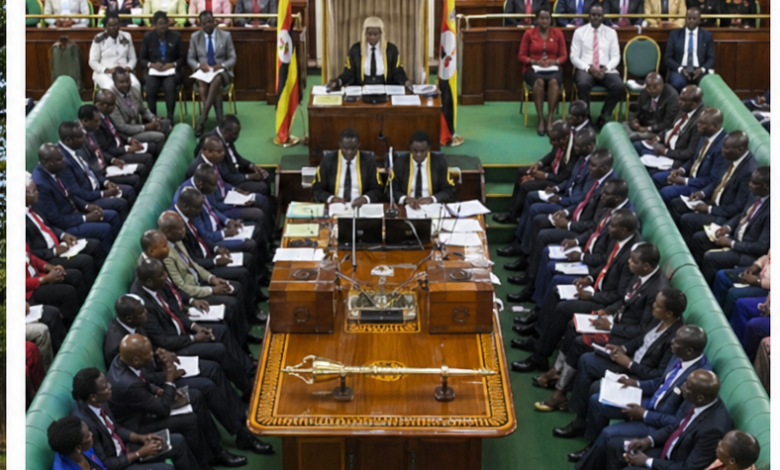
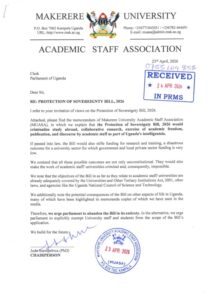
Kampala, Uganda — A storm is brewing within Uganda’s academic corridors after the Makerere University Academic Staff Association (MUASA) issued a strongly worded memorandum rejecting the controversial Sovereignty Protection Bill, 2026. Addressed to the Clerk of Parliament of Uganda, the document lays bare what scholars describe as a direct assault on academic freedom, research collaboration, and the very fabric of intellectual discourse in the country.
A Bill Framed as Protection, Viewed as Suppression
At the heart of MUASA’s protest is a fundamental concern: that the proposed law, while presented as a safeguard of national sovereignty, could instead criminalize core academic functions. The association warns that routine scholarly activities—ranging from collaborative research and publication to public discourse—risk being interpreted as violations under the Bill.
In their submission, university dons argue that such provisions would suffocate Uganda’s knowledge economy by restricting the exchange of ideas and isolating local academia from global intellectual networks.
Academic Freedom Under Siege
MUASA’s memorandum paints a grim picture of the potential fallout. The Bill, they argue, threatens to:
- Undermine independent research and innovation
- Restrict partnerships with international institutions
- Criminalize intellectual debate and publication
For a country whose universities already grapple with limited funding, the association warns that further constraints could cripple the sector entirely.
“The outcome would be disastrous,” the memorandum suggests, pointing to an already fragile ecosystem where both government and private sector investment in higher education remains insufficient.
Legal Redundancy or Political Overreach?
Interestingly, MUASA does not merely oppose the Bill on principle—it challenges its necessity. The scholars contend that existing legal frameworks, including the Universities and Other Tertiary Institutions Act, 2001, alongside oversight bodies like the Uganda National Council for Science and Technology, already address the concerns the Bill purports to solve.
This raises a critical question in their analysis: Is the Sovereignty Protection Bill a solution in search of a problem—or a calculated move to tighten control over intellectual spaces?
Wider Implications Beyond Academia
MUASA also warns that the Bill’s implications stretch far beyond lecture halls and research labs. The association references growing public concern—reflected in media discussions—about how the law could affect civil liberties, free expression, and civic engagement across Uganda.
Their argument suggests that what begins as a clampdown on academia could ripple outward, reshaping the country’s democratic and social landscape.
A Call for Total Withdrawal
In one of the most forceful sections of the memorandum, MUASA does not mince words: it calls on Parliament to abandon the Bill in its entirety. As an alternative, the association proposes explicit exemptions for university staff and students—though its preference remains outright rejection.
The message is clear: Uganda’s academic community is not seeking compromise on what it views as a non-negotiable principle—intellectual freedom.
The Bigger Political Test
As debate on the Sovereignty Protection Bill intensifies, MUASA’s intervention adds a powerful institutional voice to the opposition. It places lawmakers at a crossroads—between asserting state control and preserving the autonomy of knowledge institutions.
For many observers, the unfolding debate is no longer just about sovereignty. It is about the soul of Uganda’s intellectual and democratic future.
#UgandaToday #PhoenixNewsFeeds #OperaNewsFeeds #AcademicFreedomUG #SovereigntyBill #MakerereVoices