Exile in Chains: The Historic Image of Buganda’s Mwanga II and Bunyoro’s Kabalega in Colonial Captivity
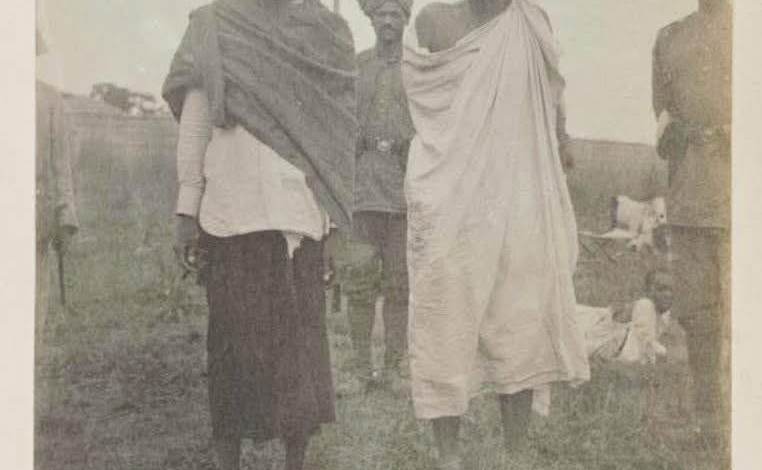
The image shows the two monarchs dressed in traditional attire, Kabalega with one arm, standing under guard. Despite the circumstances, their posture reflects resilience and a quiet defiance. This photograph remains one of the few visual records of these leaders during this critical turning point in their lives.
Ssekabaka Kiwamirembe Kirevuntende Basammulekkere Mwanga and Kabarega Chwa whose one arm had been off during captivity in Mumias (Present day Kakamega in Kenya). The duo were enroute to Sychelis Islands banishment from their respective kingdoms.
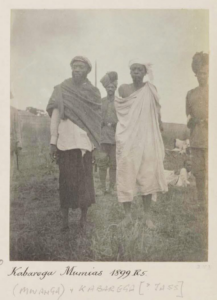
1899, Ssekabaka Kiwamirembe Kirevuntende Basammulekkere Mwanga II (left) and Kabarega Chwa II whose one arm had been cut off during captivity. The photo was taken in Mumias (Present day Kakamega in Kenya). The duo were enroute to Seychelles Islands banishment from their respective kingdoms.
UgandaToday: Exile in Chains: The Historic Image of Buganda’s Mwanga II and Bunyoro’s Kabalega in Colonial Captivity
A rare and haunting photograph taken in 1899 at Mumias in present-day Kakamega, Kenya, captures two of East Africa’s most defiant monarchs—Buganda’s Kabaka Mwanga II and Bunyoro’s Omukama Kabalega—standing side by side in enforced exile. The image, frozen in time, tells a powerful story of resistance, defeat, and the enduring legacy of African sovereignty under siege by British imperial expansion.
A Moment After Resistance
By the late 19th century, both Mwanga II and Kabalega had become central figures in resisting British colonial domination in what is now Uganda. Mwanga II, who ruled Buganda Kingdom during a period of intense political and religious upheaval, had clashed with British-backed factions and missionaries. Meanwhile, Kabalega led a prolonged and determined armed resistance against British forces seeking to subdue the Bunyoro-Kitara Kingdom.
Their separate struggles converged dramatically when the two leaders formed an alliance against the British. However, after years of pursuit, they were captured in 1899 by colonial forces. The photograph taken in Mumias documents the immediate aftermath of that capture—an image that symbolizes both defeat and dignity.
The Journey to Exile
Following their arrest, Mwanga II and Kabalega were transported through present-day Kenya en route to exile in the Seychelles Islands. The British colonial administration viewed their continued presence in East Africa as a threat capable of reigniting resistance movements.
The image shows the two monarchs dressed in traditional attire, Kabalega with one arm, standing under guard. Despite the circumstances, their posture reflects resilience and a quiet defiance. This photograph remains one of the few visual records of these leaders during this critical turning point in their lives.
Symbolism of Unity and Resistance
Historians often interpret the joint capture of Mwanga II and Kabalega as a symbolic moment in East African resistance history. Though from different kingdoms with distinct political systems, their alliance demonstrated a rare unity against colonial encroachment.
Their deportation marked the effective end of organized royal resistance in the region at the time, paving the way for full British control under the Uganda Protectorate.
Legacy Beyond Exile
Both Mwanga II and Kabalega would spend years in exile before their eventual deaths far from their homelands. Yet their legacy endures. In Uganda today, they are remembered as national heroes who stood against foreign domination.
Kabalega, in particular, has been posthumously honored for his resistance, while Mwanga II’s reign continues to be studied for its complex intersection of politics, religion, and colonial confrontation.
A Photograph That Speaks Across Generations
This 1899 image from Mumias is more than a historical artifact—it is a visual testimony of courage, loss, and the enduring spirit of African leadership. For Uganda and the broader East African region, it serves as a reminder of a past defined by struggle and the unyielding quest for self-determination.
1899 Ssekabaka Kiwamirembe Kirevuntende Basammulekkere Mwanga and Kabarega Chwa whose one arm had been off during captivity in Mumias (Present day Kakamega in Kenya). The duo were enroute to Sychelis Islands banishment from their respective kingdoms.
UgandaToday is published by CMK Media Solutions. UgandaToday is your trusted source for news and analysis.
Partner with Uganda Today where your story matters in shaping the social and economic dynamics of the country.
Let’s help you grow your brand and keep your audience informed.
Website:https://www.ugandatoday.co.ugWhatsApp: +256 702 239 337
X (formerly Twitter):@uganda43443 |
Email:ugandatodayedition@gmail.com
P.O.BOX 184351 Kampala.
Uganda