Before the Intrusion: How Buganda Was Governed Under the Kabaka’s Sacred Order
Watch Video: A circulating video that has since sparked renewed cultural reflection revisits Buganda’s pre-colonial governance structure, placing the Kabaka at the very center—not only as a political sovereign, but as the supreme spiritual leader whose authority was inseparable from the soul of the kingdom.

UgandaToday: Before the Intrusion: How Buganda Was Governed Under the Kabaka’s Sacred Order
By Uganda Today Cultural Desk
Long before foreign intrusion disrupted its organic systems, the Kingdom of Buganda stood as one of Africa’s most sophisticated and spiritually anchored political entities—governed not merely by authority, but by sacred order, cultural discipline, and deep symbolism.
A circulating video that has since sparked renewed cultural reflection revisits Buganda’s pre-colonial governance structure, placing the Kabaka at the very center—not only as a political sovereign, but as the supreme spiritual leader whose authority was inseparable from the soul of the kingdom.
The Kabaka: More Than a King
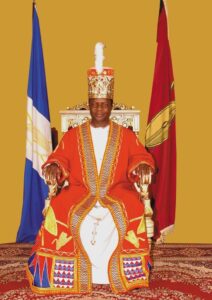
In the traditional Buganda order, the Kabaka was not a ceremonial figurehead. He embodied the spiritual continuity of the people, the custodian of customs, and the living symbol of unity between the living, the ancestors, and the land. Governance flowed from him through a meticulously organised administrative hierarchy that balanced power, responsibility, and accountability.
Every institution within Buganda had meaning, function, and restraint—ensuring harmony rather than domination.
Mujjaguzo: The Drum That Spoke for the Kingdom
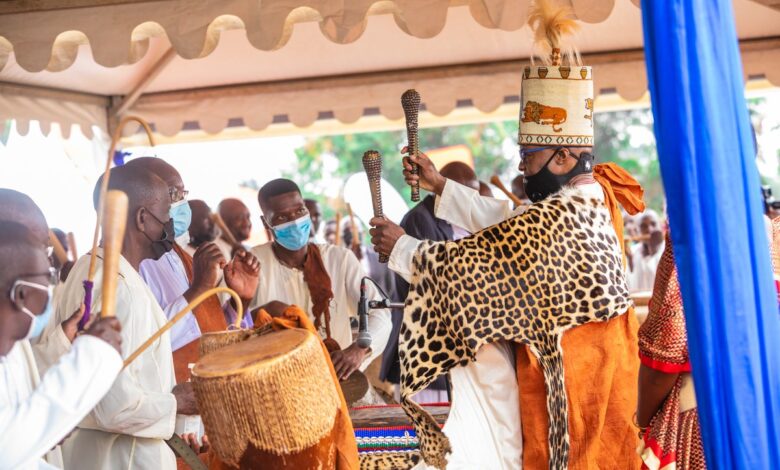
Central to this sacred order was the Mujjaguzo, the royal drum whose sound carried authority, instruction, and spiritual warning. The drumming was never entertainment. Each rhythm communicated a specific message—summoning chiefs, announcing royal movements, or signalling moments of national significance.
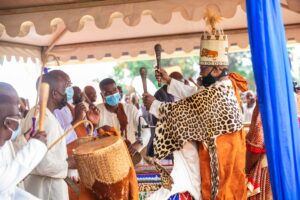
To the Baganda, the Mujjaguzo was the voice of the kingdom. Its silence or sound shaped public conduct, reinforcing discipline and collective identity.
A Structured Administration Rooted in Culture
The video further explains Buganda’s layered administrative system, where responsibilities were clearly defined—from clan heads to county chiefs, and from palace officials to territorial overseers. This structure ensured governance close to the people while maintaining loyalty to the Kabaka.
Leadership was earned through lineage, service, and moral standing, not coercion. Justice, land stewardship, and social order were administered within cultural norms that emphasised consensus and respect.
The Disruption of an Indigenous Order
According to the narration, this finely balanced system was gradually infiltrated and weakened by foreign influence, which introduced alien governance models that neither understood nor respected Buganda’s spiritual foundations. The result was the erosion of indigenous authority, distortion of institutions, and marginalisation of cultural governance in favour of imposed structures.
Yet, as the video underscores, the memory of what Buganda was—and stood for—remains deeply alive.
A Call to Cultural Reawakening
As debates around federalism, cultural autonomy, and historical justice continue in modern Uganda, such reflections serve as reminders that Buganda’s governance was neither primitive nor accidental. It was deliberate, spiritual, and profoundly African.
The story of Buganda before foreign intrusion is not merely history—it is a cultural compass, pointing to identity, dignity, and self-definition.
#BugandaKingdom #Kabaka #Mujjaguzo #AfricanHistory #CulturalHeritage #UgandaToday