
UgandaToday: The Unresolved Transition from Liberation Legitimacy to Institutional Legitimacy

Director of Strategy and Innovation, Ideation Able Holding Ltd (Uganda)
Social Entrepreneurship Consultant
📧 Email: davidkafeero2@gmail.com
By David Kafeero
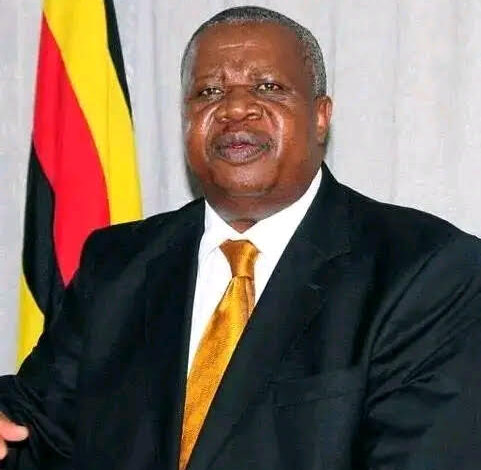
To: Hon. Maj. Gen. (Rtd) Kahinda Otafiire
Minister of Internal Affairs, Republic of Uganda
A Nation at Crossroads: From Liberation Glory to Institutional Paralysis
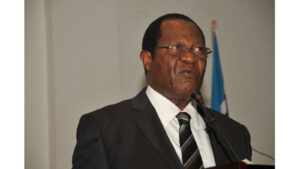
During your recent address at the memorial of former Chief Justice Benedicto Kiwanuka and Hon. Sam Kalega Njuba, you candidly admitted that Uganda’s ongoing social unrest and governance stagnation stem from deep-rooted structural dilemmas.
Your reflection touches the very heart of Uganda’s enduring challenge — the arrested transition from Liberation Legitimacy to Institutional Legitimacy.
1️⃣ The Stalled Transition: Liberation Legitimacy → Institutional Legitimacy
Uganda remains suspended in its post-liberation stagnation phase.
The Odoki Constitutional Commission Findings — which reportedly cost between $8 million and $15 million — were envisioned as a national bridge towards a new governance dispensation, one where competence, not liberation credentials, would define leadership and institutional excellence. This could have been Uganda’s own version of China’s post-Mao transformation under Deng Xiaoping, whose pragmatic doctrine stated:
“It doesn’t matter whether a cat is black or white, as long as it catches the rat.”
By shelving the Odoki recommendations, Uganda inadvertently institutionalized a monopoly of vision — where one of the 15 historical groups that defined Uganda’s 1962 political architecture assumed sole wisdom in charting the nation’s destiny.
The result has been what might be called “The Golden Age of Arrogance, Stupidity, and Willful Ignorance” — an era where eloquence is mistaken for competence and podium brilliance substitutes scientific rigor.
2️⃣ The Politics of Subtraction and Binary Exclusion
Our political culture is anchored in subtraction rather than integration. New entrants into Uganda’s leadership space often define themselves not by what they can add, but by what they can dismantle. This culture of political subtraction erodes institutional memory and continuity, replacing substance with spectacle.
The result is a binary political architecture — a zero-sum ecosystem that punishes merit and rewards loyalty to the fading echo of liberation nostalgia.
3️⃣ Abstract Utopia vs Concrete Utopia
Uganda’s governance narrative thrives on Abstract Utopia — grand promises, televised launches, and glossy infrastructure symbols that seldom translate into sustainable systems.
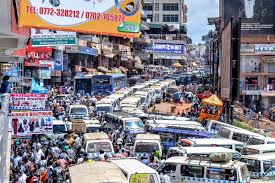
But Concrete Utopia demands measurable progress across indices like:
-
Transport and logistics reliability
-
Consistent power and water supply
-
Efficient petroleum imports
-
Strengthened regional trade linkages
The absence of a coherent Infrastructure Reliability Index (IRI) has trapped Uganda in chronic inefficiency. Without such reliability, no credible business ecosystem can emerge, and no social value system — whether local or global — can sustainably evolve.
🧩 The Way Forward: Embracing Institutional Legitimacy
Uganda can only escape its post-liberation stagnation by decisively shifting toward institutional competence and measurable accountability. That journey must begin with:
-
Revisiting and operationalizing the Odoki Constitutional Commission Findings as a national governance re-foundation blueprint.
-
Building competence-based institutions rooted in performance metrics, not revolutionary credentials.
-
Institutionalizing the Infrastructure Reliability Index (IRI) within national planning and NDP monitoring frameworks.
-
Aligning education, innovation, and governance through evidence-based specialization, not rhetorical nationalism.
🕊️ Closing Reflection
As you rightly noted, Honourable Minister, “understanding the issues of most concern in Uganda” requires intellectual honesty and historical courage. The Liberation Era delivered Uganda from tyranny — but only the Institutional Era will deliver Uganda from stagnation. The time to transition is now.
Respectfully submitted,
David Kafeero
Director of Strategy & Innovation – IDEATION
Diaspora NSSF Member | ABLE Holding Ltd – Uganda
📞 +256 777 025013 | 📧 davidkafeero2@gmail.com
#InstitutionalLegitimacy #UgandaGovernance #OdokiReport #LiberationEra #KafeeroDavid #Phoenix #Opera #UgandaToday
This article, authored by Mr. David Kafeero, reflects his independent analysis and professional opinion. It does not, in any way, represent the editorial position or institutional views of Uganda Today.