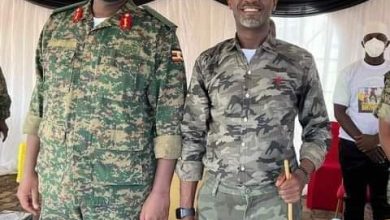
Museveni Downplays Kadaga’s Influence in Busoga as Tensions Flare at NRM NEC Meeting
The high-stakes NEC meeting—ostensibly convened to discuss internal party cohesion and strategy—turned contentious when the race for NRM National Woman Vice Chairperson for Eastern Region between Kadaga and Speaker of Parliament Anita Among revealed deeper fractures in the party’s top brass.

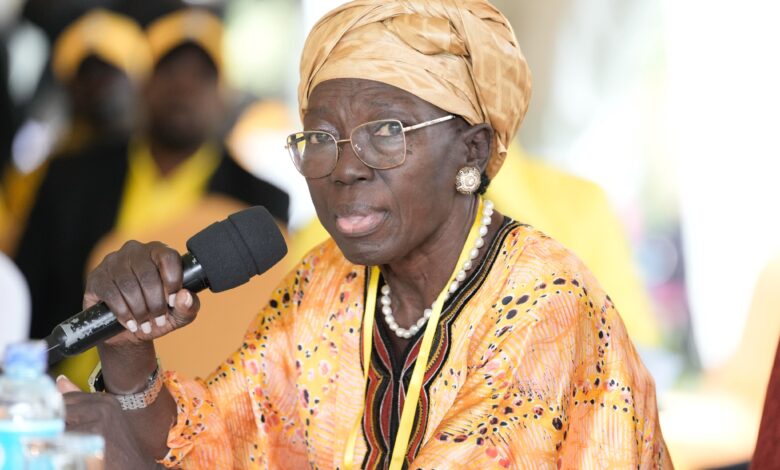
Uganda Today:Museveni Downplays Kadaga’s Influence in Busoga as Tensions Flare at NRM NEC Meeting
By Uganda Today Political Desk | Entebbe – August 25, 2025
President Yoweri Museveni has publicly downplayed the political influence of former Speaker of Parliament Rebecca Alitwala Kadaga in her home region of Busoga, following a tense exchange during the National Resistance Movement (NRM) National Executive Committee (NEC) meeting held at State House Entebbe on August 23, 2025.
The high-stakes NEC meeting—ostensibly convened to discuss internal party cohesion and strategy—turned contentious when the race for NRM National Woman Vice Chairperson for Eastern Region between Kadaga and Speaker of Parliament Anita Among revealed deeper fractures in the party’s top brass.
Kadaga Unleashes Unfiltered Criticism
In a rare show of defiance, Kadaga stood up and, without mincing words, directly accused President Museveni of engineering selective competition within the ruling party.
“You have ring-fenced the positions of Chairman and Vice Chairman for yourself and your loyalists in perpetuity. But when it comes to me, suddenly competition is welcomed—unmerited and suspicious. What message does this send to our party and the country?” Kadaga charged.
Her remarks sent murmurs across the conference hall, as senior party figures, including Secretary General Richard Todwong and Government Chief Whip Denis Hamson Obua, exchanged tense glances.
Museveni Dismisses Kadaga’s Clout
Museveni, seemingly unbothered, took to the podium moments later and brushed off Kadaga’s concerns with a tone laced with both irony and disdain.
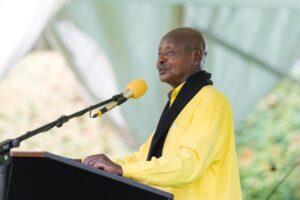
“My friend Rt. Hon. Kadaga should stop thinking that she is being hunted. Nobody is hunting you”. However you have raised an important technical question of 10 years contribution to the NRM from every aspiring CEC contestant which i will ask our attorneys to look into”.He explained that he is the one who liberated Busoga.
His remarks, viewed by political observers as a calculated attempt to neutralize Kadaga’s perceived leverage, sparked further whispers of discontent in a party long plagued by internal contradictions.
Anita Among Strikes a Contrasting Tone
Speaker Anita Among, Kadaga’s chief rival for the CEC seat and a key Museveni ally, echoed the President’s sentiment but wrapped it in conciliatory language.
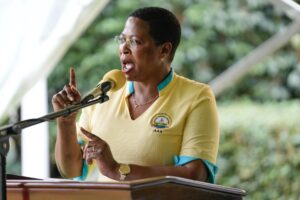
“We must build the party through unity, not entitlement. No position is sacred unless endorsed by the people and the party structures, in Anita Among you have an asset” she said, pointedly but tactfully.
Among’s positioning aligns her closely with Museveni’s faction within the NRM—a faction that has consistently sidelined independent-minded cadres like Kadaga in favor of more pliant loyalists.
Kadaga’s Long and Costly Loyalty to NRM
Kadaga’s current estrangement from the Museveni camp stands in sharp contrast to her earlier years of unwavering service to the party. As Deputy Speaker in the 7th and 8th Parliaments, and later as Speaker of the 9th and 10th Parliaments, she played a crucial role in furthering the NRM agenda.
Her most defining—and controversial—moment came during the 2017 age limit constitutional amendment, where she presided over a Parliament that ultimately voted to remove the presidential age cap. That vote cleared the way for Museveni to contest in the 2021 elections, widely regarded as the most chaotic and militarized in Uganda’s recent history.
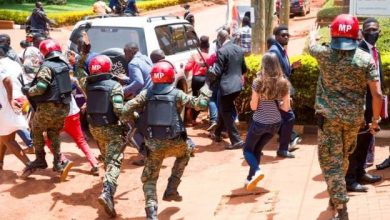
During that infamous session, Museveni ordered the military to invade Parliament, violently dragging out opposition MPs and leaving several, including Hon. Francis Zaake and Hon. Betty Nambooze, with lifelong injuries. Kadaga’s role in that episode earned her the label of “traitor” from the opposition and “loyal cadre” from the NRM—until her fallout with Museveni began in earnest.
NRM’s Silent Grudge Against Kadaga Over Busoga Losses
Within NRM circles, there remains simmering resentment over the party’s poor showing in Busoga during the 2021 general elections. Many blame Kadaga for allegedly failing to mobilize sufficient support for Museveni, with some accusing her of “soft betrayal.”
However, Kadaga has repeatedly rejected that narrative:
“If I am responsible for NRM’s defeat in Busoga, was I also responsible for the humiliating losses in Buganda? Let’s stop scapegoating and face the truth—our people are tired.” Kadaga has ever stated at at some media platform.
NUP Expands in Kadaga’s Backyard
While NRM leaders bicker over internal succession politics, the National Unity Platform (NUP), Uganda’s main opposition party, has wasted no time expanding its reach. Just a day after the NEC meeting, NUP unveiled its new Eastern Region headquarters—strategically located in Iganga, in the heart of Busoga.
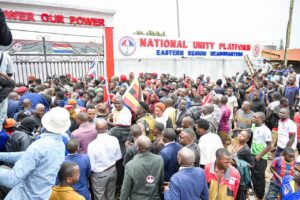
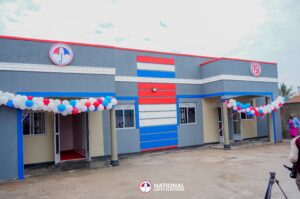
This move symbolically dents Kadaga’s perceived dominance in the region and amplifies the growing dissatisfaction with the ruling party’s national leadership, despite her long-standing presence. Because of her mature political tolerance of avoiding abusing her office to thwart opposition moblistion, Kadaga earned disfavour from Museveni. No wonder during her time of stewardship of parliament, when she seemingly tried to toe a neutral line of debate, Museveni, one time, in a denigrating manner said: “This girl from Busoga whom we made a speaker, she is trying to use that position to work against us” No wonder, after that term, on the eve of the elections for the Speaker of Parliament, Museveni worked around the clock, burning midnight candle to call all NRM MPs to vote out Kadaga in favour of the late Jacob Oulanyah as Speaker of Uganda’s Parliament.
State House: The Party Headquarters in Disguise
The use of State House Entebbe—a publicly funded institution—for NRM party business once again spotlighted President Museveni’s habitual conflation of state and party affairs.
Critics argue that the NEC meeting was just another example of the blatant abuse of public resources to serve partisan interests. Government fuel, protocol officers, security, and logistics were all deployed in what should have been a purely political engagement.
Conclusion: The Twilight of Kadaga’s Influence?
As Museveni continues to centralize power within a shrinking circle of loyalists, Kadaga’s political relevance within the NRM seems increasingly threatened. Yet her courage to confront the President publicly may still resonate with some factions in the party—and more so with a disillusioned electorate that remembers her past sacrifices.
What remains clear is that the NRM is far from united, and as opposition parties like NUP continue to make inroads in its former strongholds, Uganda’s political landscape is undergoing a slow but seismic shift.